Gokyo Lakes
& Cho La Pass
The turquoise gems of the Himalaya.
Duration
14 days
Route distance
120.0km
Vertical Gain
+3,200m
Max Altitude
5,420m
Mission Brief
The turquoise gems of the Himalaya.
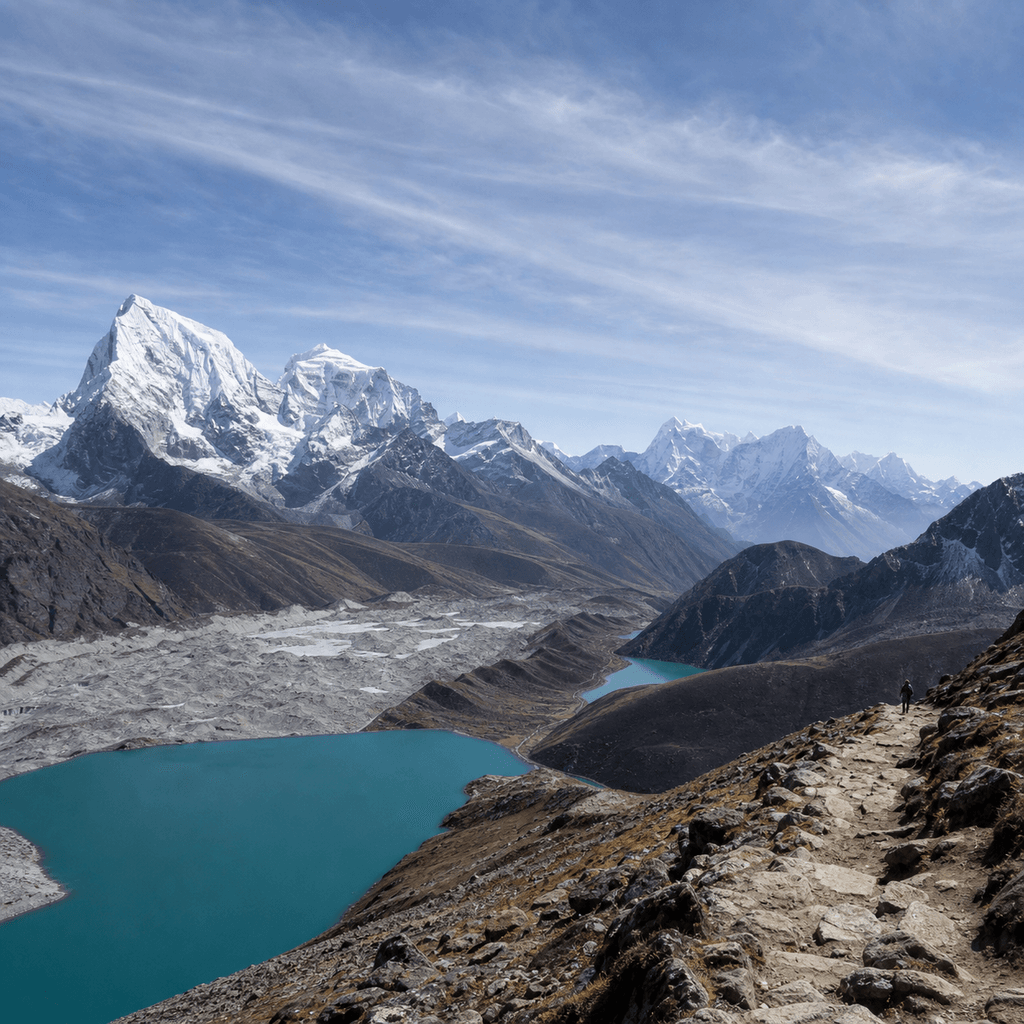
The Gokyo Lakes trek is the most scenic alternative to the direct Everest Base Camp route. It takes you through the beautiful Gokyo Valley, home to a series of six high-altitude glacial lakes, before crossing the challenging Cho La Pass (5,420m) to reach the main Everest Base Camp trail. Climbing Gokyo Ri (5,357m) offers what many experts consider the greatest view in the Khumbu—a 360-degree panorama that includes four of the world's six highest peaks: Everest, Lhotse, Makalu, and Cho Oyu, overlooking the massive Ngozumpa Glacier.
The Azure Mirror and the Cho La Scramble. The 'X-Factor' is the surreal beauty of the Third Lake (Dudh Pokhari) at sunrise, when the absolute stillness of the turquoise water reflects the massive white face of Cho Oyu.…
Mission Snapshot
Intensity Breakdown
Understanding what drives the overall route demand
Physical
82
Technical
81
Commitment
83
Primary driver: Commitment
- Sustained Physical Output
- Significant Vertical Gain
- Technical Terrain Exposure
- High Remote Commitment
Major expeditions for elite teams. Sustained isolation and technical mastery required.
Full Route Breakdown
Complete stage overview with transparent route metrics. Values are shown as recorded in the route dataset and source links.
Distance
120.0 km
Ascent
3,200 m
Highest point
5,420 m
Start
Gokyo Valley
Finish
The Everest Connection
Use the KM / MI toggle in the main menu to switch units.
Route Considerations
This route is generally safe, but these are the main factors to be aware of.
Icy pass conditions
The eastern side of Cho La Pass involves a descent over a glacier that can be extremely slippery and dangerous without proper traction.
Impact
Route-specific
Likelihood
Context-dependent
Tip
Carry micro-spikes or lightweight crampons; start the pass crossing at dawn before the ice begins to melt and becomes unstable; stay with a guide or a group to navigate hidden crevasses on the upper glacier.
Acute mountain sickness ams
Spending multiple nights in Gokyo (4,700m) and crossing a 5,400m pass puts trekkers at high risk.
Impact
Route-specific
Likelihood
Context-dependent
Tip
Follow a proper acclimatization schedule; stay for at least 2 nights in Gokyo before attempting the pass; drink 4L of water; monitor oxygen levels if possible.
Altitude Warning
Potential altitude-related conditions include AMS, HAPE, and HACE. Adequate acclimatization is essential.
Impact
Route-specific
Likelihood
Context-dependent
Tip
Strict adherence to hydration and gradual ascent protocols (climb high, sleep low).
Why hike this route?
LANDSCAPE
The almost surreal electric turquoise of the Gokyo Lakes set against the stark, monochromatic grey of the surrounding 8,000m giants.
VARIETY
The transition from the lush juniper forests of the lower valley to the raw, high-altitude world of the Cho La glacier.
CULTURE & PLACE
The quieter, more authentic Sherpa villages of the Gokyo Valley compared to the more commercialized hubs on the main Everest trail.
STANDOUT
The Azure Mirror and the Cho La Scramble. The 'X-Factor' is the surreal beauty of the Third Lake (Dudh Pokhari) at sunrise, when the absolute stillness of the turquoise water reflects the massive white face of Cho Oyu. This serenity is contrasted by the physical intensity of the…
Expert Verdict
“Gokyo is the hidden soul of the Khumbu. Most people rush to EBC to say they were at the 'base', but they miss the fact that the view from Gokyo Ri is objectively better—you can actually see Everest's full profile, not just its shoulder. Experienced hikers often suggest spending two nights in Gokyo village. Use the extra day to hike to the 'Fourth and Fifth Lakes' (Thonak Tsho and Ngozumpa Tsho)—the crowds disappear completely and the view of Everest's North Face from the Fifth Lake is haunting. For the Cho La crossing, start at 4:30 AM. You want to be off the glacier before the sun softens the snow and increases the risk of rockfall in the 'gulley' descent. Finally, don't forget your Category 4 sunglasses; the reflection off the Ngozumpa Glacier is blinding and high-altitude snow-blindness is a very real threat here. Budget two nights at Gokyo (4,790 m) before Cho La; the pass day alone often runs 8–10 hours with micro-spikes mandatory.”
Who This Is For
- ADVANCED — For active hikers who want the beauty of the Everest region without the heavy human traffic of the main trail. You should have prior high-altitude experience (above 4,000m) and be comfortable with technical movement on ice and loose scree. This is for the trekker who values pano…
- PHYSICAL — High. While you benefit from teahouses, the consecutive days above 4,700m and the grueling 10-hour day required for the Cho La Pass crossing are incredibly taxing. You need a strong aerobic base and the mental focus to…
- WATCH FOR — Attempting the Cho La Pass without micro-spikes or crampons; the summit glacier can be sheer blue ice, making it a vertical slide without traction.
- WATCH FOR — Rushing to Gokyo too fast from Namche; the altitude gain is significant, and 'Gokyo Headache' is a common sign of poor acclimatization.
Plan This Hike
Key things to arrange before starting this route—practical tips first, then buttons that open curated picks (gear, maps, stays) where we list them.
Essential Gear
Recommended preparation for this route:
Cold Khumbu trek with a real pass-crossing day.
- Microspikes or light crampons for Cho La conditions
- Down jacket, shell, and Category 4 sunglasses
- Trekking poles for moraine and glacier-edge travel
Stay Connected
Explore accommodation options for this trail:
Patchy signal and weather-sensitive pass timing.
- Download Khumbu maps before flying to Lukla
- Start Cho La before dawn in stable weather
- Carry insurance details for helicopter evacuation
Getting There
Travel and trail access for this route:
Lukla and Namche remain the practical entry points.
- Plan Kathmandu to Lukla flights with 2-3 buffer days
- Carry Sagarmatha and Khumbu permit details
- Verify guide rules before booking the route
Where to Stay
Explore accommodation options for this trail:
Tea houses exist, but Gokyo and Dzongla can fill.
- Reserve or arrive early at Dragnag and Dzongla
- Sleep two nights in Gokyo if acclimatization allows
- Carry cash for lodges, charging, and hot drinks
Compare This Route
See how this route compares to similar hikes in overall demand and terrain profile.Compare routes by the shape of the effort, not only the headline score.
Terskey Alatau & Ala-Köl Lake
Closest overall match in demand profile
Ala-Köl is a world-renowned glacial lake set within the Terskey Alatau rang...
Intensity
Lower intensityGR10 — The Pyrenees Traverse
Lower overall intensity, similar terrain type
The GR10 is a monumental, 866km trans-Pyrenean thru-hike that traverses the...
Intensity
Lower intensityKangchendzonga Himal
Higher physical or technical demand
The frontier of the Himalaya. The Kangchendzonga trek is one of Asia's most...
Intensity
Higher intensityExplore Alternatives
Broaden the picture with easier, harder, and nearby options.
Looking for something easier?
Lower intensity — helpful if this route feels like a stretch right now.
Want more challenge?
Higher intensity — for when you are ready for a bigger physical or technical step.
More hikes in this region
Nearby and regionally relevant routes for the next step in your search.
Everest Base Camp
khumbu-everest · nepal
Distance
130.0 km
Ascent
2,700 m
Three Passes Trek
khumbu-everest · nepal
Distance
170.0 km
Ascent
7,000 m
Manaslu Circuit
manaslu-conservation-area · nepal
Distance
180.0 km
Ascent
4,200 m
Makalu Base Camp
sankhuwasabha-eastern-nepal · nepal
Distance
150.0 km
Ascent
4,200 m
Tsho Rolpa Trek
rolwaling-valley · nepal
Distance
120.0 km
Ascent
3,200 m
Annapurna Circuit
annapurna-conservation-area · nepal
Distance
230.0 km
Ascent
4,500 m
Compare with any route
Pick any hike worldwide and open a full side-by-side comparison.
What You Need to Know
Essential answers about the demands, risks, and logistics of this route.
Q.How hard is this hike really?
Q.Do I need technical gear?
Q.Is water available on the route?
Q.What is the main risk?
Ready to hike Gokyo Lakes & Cho La Pass?
A final decision point after reviewing the route, risks, logistics, and alternatives.
This route is a strong match if you're comfortable with the effort level implied by an Intensity Score around 90/100 (Expedition), sustained hiking where this route requires it, and the terrain and exposure described in this guide.
Build your itinerary, stages, and logistics.
Looking for something easier, more challenging, or a different terrain profile?
Compare routes by intensity, terrain, and region.