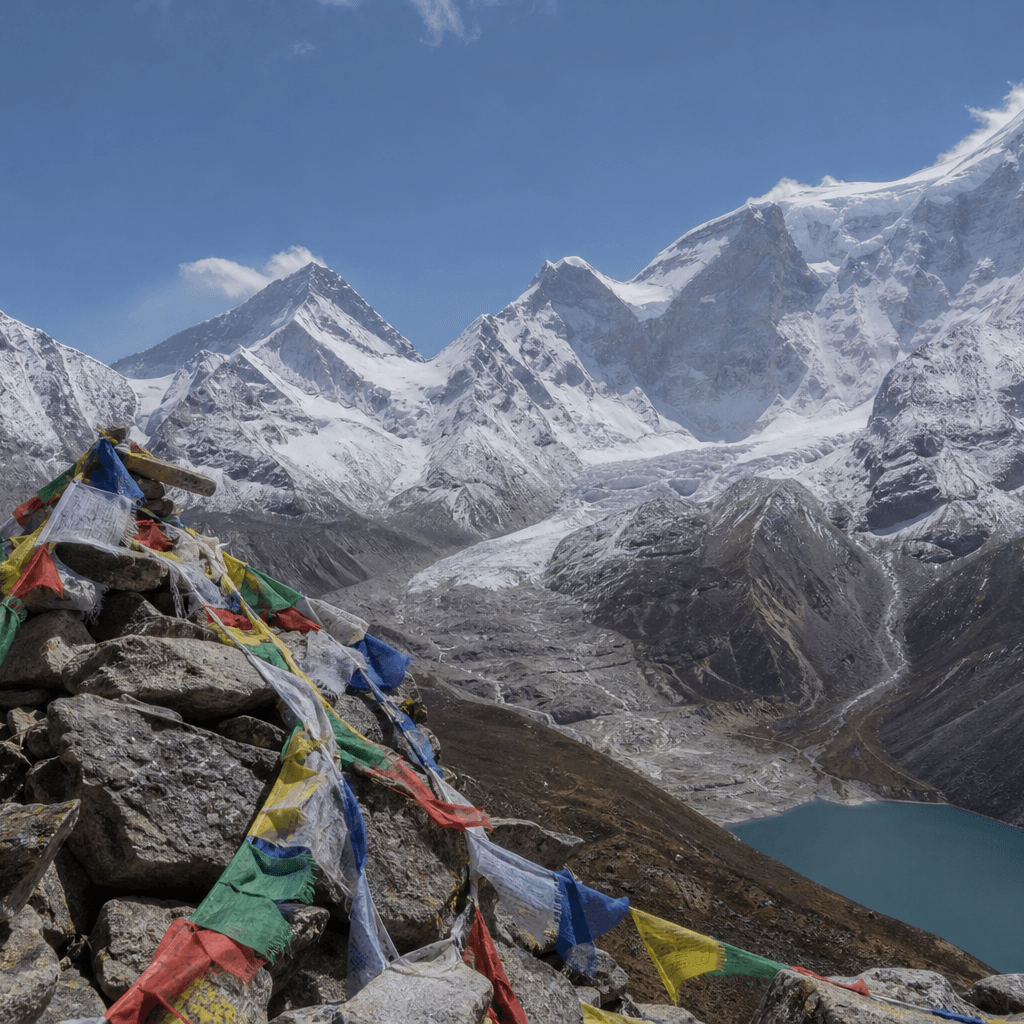
Three Passes
Trek
~170 km modeled loop, ~7,000 m cumulative gain, typically 18–21 days with acclimatization (distance varies with side trips).
Duration
19 days
Route distance
170.0km
Vertical Gain
+7,000m
Max Altitude
5,535m
Mission Brief
The Three Passes Trek is a ~170 km modeled tea-house loop in the Everest region crossing Kongma La (5,535 m), Cho La (5,420 m), and Renjo La (5,360 m).
It is harder than classic EBC: long days above 5,000 m, boulder navigation on passes, and weather-dependent crossings—not technical mountaineering, but altitude and stamina dominate. Total distance varies with side-trip choices; 170 km is our standard variant including EBC and Gokyo Ri sectors.
The full Khumbu loop over Kongma La, Cho La, and Renjo La—more demanding than classic EBC, with long days above 5,000 m and tea-house logistics.
Mission Snapshot
Intensity Breakdown
Understanding what drives the overall route demand
Physical
88
Technical
55
Commitment
82
Primary driver: Sustained high-altitude pass circuit
- Kongma La 5,535 m boulder navigation
- Cho La glacier tread and weather sensitivity
- 10+ days consistently above 4,800 m
- Long no-water sections on pass days
Extreme reflects altitude duration and pass-day navigation, not expedition remoteness. Tea houses reduce camping load versus true alpine expeditions, but consecutive 5,000 m days tax recovery—treat as a step above standard EBC.
Full Route Breakdown
Complete stage overview with transparent route metrics. Values are shown as recorded in the route dataset and source links.
Distance
170.0 km
Ascent
7,000 m
Highest point
5,535 m
Start
Lukla (Tenzing-Hillary Airport approach)
Finish
Lukla (loop)
Use the KM / MI toggle in the main menu to switch units.
Route Profile
Fixed backcountry campground structure for this route
Operational Reality
Stage distances sum to 170 km — our modeled standard variant including the main Three Passes loop from Lukla plus standard acclimatization and side trips to Everest Base Camp, Kala Patthar, and Gokyo Ri. Published trek distances commonly range ~130–170 km depending on side-trip choices. Not survey-grade GPS.
Route Considerations
Extreme altitude exposure (many days above 4,800 m), AMS/HAPE risk, pass-day weather sensitivity. Carry 3–4 L water on pass legs; micro-spikes for icy Cho La tread.
Extreme altitude fatigue
Spending almost 10 days consistently above 4,800m is taxingly strenuous on even the fittest hikers.
Impact
Route-specific
Likelihood
Context-dependent
Tip
Allow for at least 3 weeks for the full loop; do not attempt the passes in consecutive days—take rest days in between; monitor your health obsessively; carry emergency oxygen.
Technical pass navigation
Passes like Kongma La and Cho La can be incredibly tricky to navigate if clouds come in or if there is fresh snow over the boulders/glaciers.
Impact
Route-specific
Likelihood
Context-dependent
Tip
Hiring a highly experienced local Sherpa guide is strongly recommended for this specific route; carry micro-spikes and a high-accuracy GPS; never attempt a pass crossing in bad weather.
Altitude Warning
Potential altitude-related conditions include AMS, HAPE, and HACE. Adequate acclimatization is essential.
Impact
Route-specific
Likelihood
Context-dependent
Tip
Strict adherence to hydration and gradual ascent protocols (climb high, sleep low).
Why hike this route?
LANDSCAPE
The comprehensive, panoramic scale of the Himalaya—seeing four 8,000m peaks from three different, 5,000m+ perspectives.
VARIETY
The constant shift between the bustling teahouse culture of Namche and the silent, prehistoric rocky wilderness of the high passes.
CULTURE & PLACE
The privilege of exploring the 'hidden' valleys of Chhukhung and Thame, where the Sherpa way of life remains largely local and tourism is secondary.
WHY GO
The full Khumbu loop over Kongma La, Cho La, and Renjo La—more demanding than classic EBC, with long days above 5,000 m and tea-house logistics.
Expert Verdict
“The Three Passes loop shows the Khumbu from three 5,000 m+ angles—harder than linear EBC because of pass-day boulder work and altitude duration. Go slow on Kongma La, carry pass-day water, and do not attempt cols in building weather. A prior 5,000 m trek in Nepal is sensible preparation.”
Who This Is For
- EXPERT — For active trekkers who have completed at least one 5,000m trek. Requires comfort with rugged, high-consequence terrain, including shifting boulder fields, glacier traverses, and sustained sub-zero temperatures. Not suitable for beginners; requires advanced self-reliance.
- PHYSICAL — Extremely High. Requires sustained physical output over 18-21 days, including 10+ consecutive days above 4,800m. Demands excellent cardiovascular fitness and stamina for daily 6-9 hour trekking legs in thin air.
- WATCH FOR — Attempting to cross Kongma La as your first pass; it is the highest and most difficult. If you feel weak there, either turn back or take the lower valley route.
- WATCH FOR — Underestimating the boulder fields; these are not 'trails', they are massive, shifting granite blocks that require constant balance and focus.
Plan This Hike
Key things to arrange before starting this route—practical tips first, then buttons that open curated picks (gear, maps, stays) where we list them.
Essential Gear
Recommended preparation for this route:
High-altitude tea-house trek—warm layers and pass-day traction.
- Micro-spikes or crampons for Cho La; Category 4 sunglasses
- Down jacket rated for −20°C index; Gore-Tex shell
- 3–4 L water capacity for pass days; pulse oximeter useful
Stay Connected
Explore accommodation options for this trail:
Spotty signal—offline maps and guide coordination matter.
- Download Khumbu offline maps before Lukla
- Share pass-day schedule with tea-house contacts
- Satellite messenger optional but valuable above Dingboche
Getting There
Travel and trail access for this route:
Lukla flight is the standard Khumbu entry.
- Book flexible Lukla tickets—weather delays are common
- Khumbu + Sagarmatha NP permits (approx. NPR 6,000+ total; verify current NPR rates at Lukla/Monjo)
- Consider experienced local guide for pass navigation
Where to Stay
Explore accommodation options for this trail:
Tea houses along the loop—basic at Dzongla/Chhukhung.
- Reserve busy hubs in peak weeks when possible
- Carry cash for lodges and charging fees
- Travel insurance with helicopter evacuation cover is standard advice
Compare This Route
See how this route compares to similar hikes in overall demand and terrain profile.Compare routes by the shape of the effort, not only the headline score.
Piuquenes Pass
Closest overall match in demand profile
Following the historic path used by the Army of the Andes in 1817, this 6-d...
Intensity
Lower intensityTorres del Paine O-Circuit
Lower overall intensity, similar terrain type
The significant Patagonian odyssey. The Torres del Paine 'O' Circuit is a 1...
Intensity
Lower intensityGreat Divide Trail
Higher physical or technical demand
The wild heart of the Rockies. Stretching over 1,100km from Waterton Lakes ...
Intensity
Higher intensityExplore Alternatives
Broaden the picture with easier, harder, and nearby options.
Looking for something easier?
Lower intensity — helpful if this route feels like a stretch right now.
Want more challenge?
Higher intensity — for when you are ready for a bigger physical or technical step.
The Snowman Trek
himalayas-lunana-district · bhutan
Distance
330.0 km
Ascent
18,000 m
Berliner Höhenweg — The Zillertal High-Route
Zillertal Alps, Tyrol · austria
Distance
85.0 km
Ascent
6,600 m
Hardergrat — Interlaken to Brienzer Rothorn
Interlaken/Brienz, Bernese Oberland · switzerland
Distance
23.3 km
Ascent
2,419 m
More hikes in this region
Nearby and regionally relevant routes for the next step in your search.
Everest Base Camp
khumbu-everest · nepal
Distance
130.0 km
Ascent
2,700 m
Gokyo Lakes & Cho La Pass
khumbu-everest · nepal
Distance
120.0 km
Ascent
3,200 m
Tsho Rolpa Trek
rolwaling-valley · nepal
Distance
120.0 km
Ascent
3,200 m
Annapurna Circuit
annapurna-conservation-area · nepal
Distance
230.0 km
Ascent
4,500 m
Manaslu Circuit
manaslu-conservation-area · nepal
Distance
180.0 km
Ascent
4,200 m
Makalu Base Camp
sankhuwasabha-eastern-nepal · nepal
Distance
150.0 km
Ascent
4,200 m
Compare with any route
Pick any hike worldwide and open a full side-by-side comparison.
What You Need to Know
Essential answers about the demands, risks, and logistics of this route.
Q.How hard is this hike really?
Q.Do I need technical gear?
Q.Is water available on the route?
Q.What is the main risk?
Ready to hike Three Passes Trek?
A final decision point after reviewing the route, risks, logistics, and alternatives.
This route is a strong match if you're comfortable with the effort level implied by an Intensity Score around 85/100 (Severe), sustained hiking where this route requires it, and the terrain and exposure described in this guide.
Build your itinerary, stages, and logistics.
Looking for something easier, more challenging, or a different terrain profile?
Compare routes by intensity, terrain, and region.
Data: official trail documentation and topographic sources · About