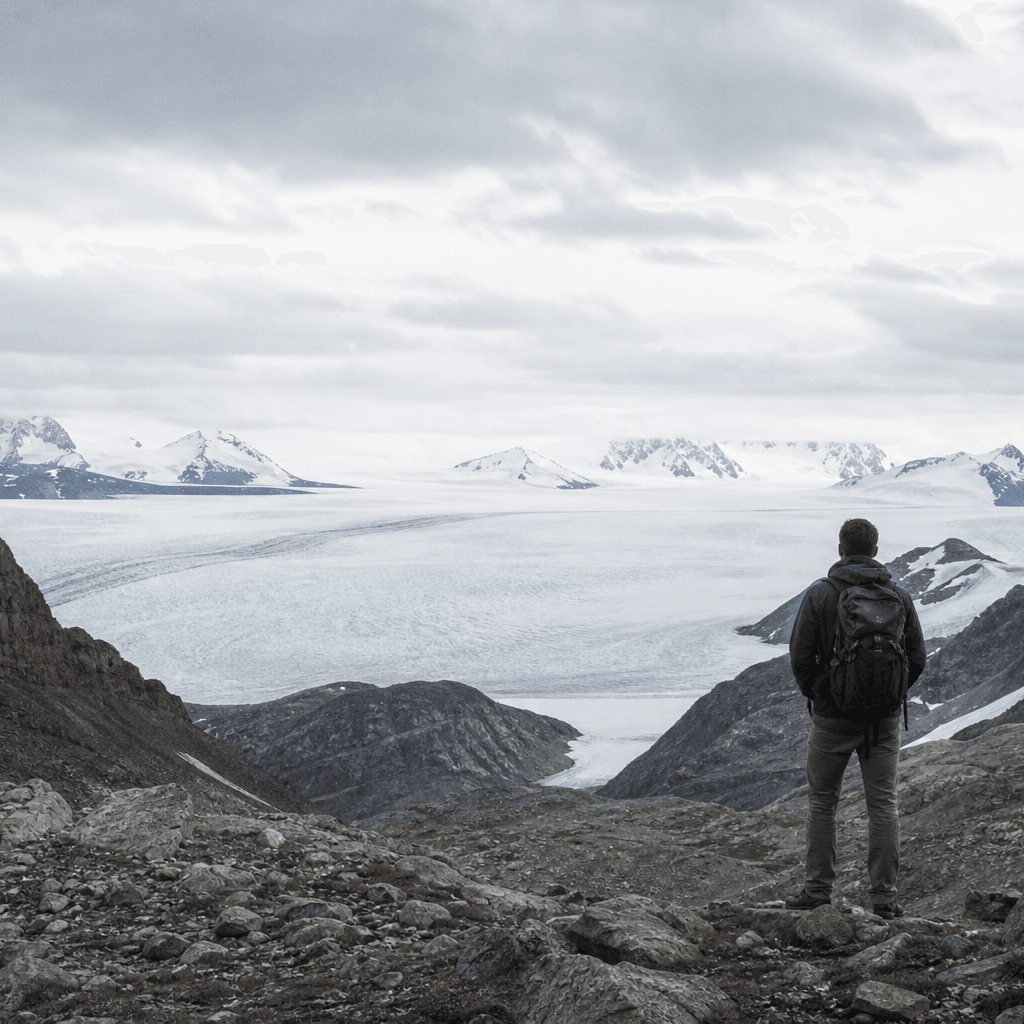
Huemul
Circuit
~65 km, ~2,800 m gain, 4–5 days self-supported — season roughly November–March.
Duration
4 days
Route distance
65.0km
Vertical Gain
+2,800m
Max Altitude
1,550m
Mission Brief
The Huemul Circuit is a ~65 km, 4–5 day self-supported trek near El Chaltén crossing Paso del Viento and Paso Huemul with views of the Southern Patagonian Ice Field.
It requires mandatory park registration, harness and steel pulley for tyrolean crossings, and tolerance for Patagonian wind—not technical climbing, but remote and gear-dependent.
A remote 4–5 day Patagonia circuit with tyrolean river crossings and direct views of the Southern Patagonian Ice Field—gear checks at the ranger station are non-negotiable.
Mission Snapshot
Intensity Breakdown
Understanding what drives the overall route demand
Physical
80
Technical
58
Commitment
72
Primary driver: Remote self-supported circuit with tyrolean crossings
- ~65 km over 4–5 days with full camping kit
- Two tyrolean crossings on steel cables
- Paso del Viento wind exposure and moraine navigation
- No cell signal; steep forest descent on day 3
Very Hard reflects Patagonian wind, tyrolean logistics, and self-sufficiency—not Himalayan altitude. Rangers gate entry on pulley/harness kit; treat this as a small-expedition circuit, not a hut trek.
Full Route Breakdown
Complete stage overview with transparent route metrics. Values are shown as recorded in the route dataset and source links.
Distance
65.0 km
Ascent
2,800 m
Highest point
1,550 m
Start
Los Glaciares NP ranger station, El Chaltén
Finish
El Chaltén (loop)
Use the KM / MI toggle in the main menu to switch units.
Route Profile
Operational Reality
Distances approximate from Wikivoyage Viedma Glacier Round Trail (Huemul Circuit) profile (63.6 km, 2,593 m climb) harmonized with staged itinerary model (~65 km total). River levels and wind can force rest days. Not survey-grade GPS.
Route Considerations
Extreme wind on passes, mandatory tyrolean crossings, no cell coverage. Harness, two locking carabiners, and steel pulley are required for the fixed-cable river work.
Extreme_winds
Winds on the high passes can be severe, particularly in summer afternoons. Gusts may make progress slow and unstable.
Impact
Route-specific
Likelihood
Context-dependent
Tip
Check local forecasts in El Chaltén before departure. Avoid attempting the passes during high-wind warnings. Maintain stable footing and use trekking poles for balance.
River_tyrolean_traverse
Two river crossings require the use of fixed steel cables (tyrolean traverses) and specialized gear.
Impact
Route-specific
Likelihood
Context-dependent
Tip
Familiarity with basic climbing equipment is required. Register at the Los Glaciares visitor centre in El Chaltén; carry harness, locking carabiners, and a steel pulley for the fixed-cable crossings.
Terrain & conditions
Conditions change quickly on the ground. Slow down on wet rock and pay more attention where paths narrow or exposure increases.
Impact
Moderate
Likelihood
Variable
Tip
Refer to stage notes and expert briefings; maintain focus on slick or exposed sections.
Why hike this route?
WHY GO
A remote 4–5 day Patagonia circuit with tyrolean river crossings and direct views of the Southern Patagonian Ice Field—gear checks at the ranger station are non-negotiable.
STANDOUT
From Paso del Viento you look across the Southern Patagonian Ice Field—one of the few trek-accessible panoramas of this scale in Patagonia.
HIGHLIGHT
~65 km, ~2,800 m gain, 4–5 days self-supported — season roughly November–March.
HIGHLIGHT
Two tyrolean river crossings require harness, locking carabiners, and a steel pulley (checked by rangers).
Expert Verdict
“The Huemul Circuit is the bridge between trekking and expedition. My advice: Don't underestimate the forest descent on Day 3—it's often harder on the knees than the ascent to the Ice Field. Cross the tyrolean at Rio Túnel early in the morning before glacial melt increases the downstream flow.”
Who This Is For
- EXPERT — Backcountry navigation, familiarity with tyrolean crossings, and self-sufficiency in remote, high-wind environments.
- PHYSICAL — High. Consistent daily output of 6-8 hours with full camping gear across rugged, often trackless terrain.
- INTENSITY — 78/100 (Very Hard) — compare with trips you have finished comfortably.
- NAVIGATION — Carry offline maps where the profile suggests remote or thinly marked legs.
Plan This Hike
Key things to arrange before starting this route—practical tips first, then buttons that open curated picks (gear, maps, stays) where we list them.
Essential Gear
Recommended preparation for this route:
Harness, steel pulley, and wind-rated tent are mandatory.
- Climbing harness, two locking carabiners, steel pulley (aluminum rejected)
- 3–4 season tent, −10°C sleeping bag, waterproof hardshell
- Trekking poles for moraine and steep forest descent
Stay Connected
Explore accommodation options for this trail:
No cell coverage on circuit — plan offline safety.
- Register and get ranger briefing in El Chaltén before departure
- Satellite messenger recommended for remote sectors
- Share intended camp nights with a contact in town
Getting There
Travel and trail access for this route:
El Chaltén trailhead — no transport needed beyond town.
- Mandatory free registration at Los Glaciares NP office
- Equipment inspection before you are cleared to start
- Season typically November–March; verify pass conditions
Where to Stay
Explore accommodation options for this trail:
Wilderness camping only — book El Chaltén lodging before/after.
- Designated camp sites: Laguna Toro, Paso del Viento, Bahía Túnel
- Carry all food; no resupply on circuit
- Travel insurance with evacuation cover is prudent for remote Patagonia
Compare This Route
See how this route compares to similar hikes in overall demand and terrain profile.Compare routes by the shape of the effort, not only the headline score.
Torres del Paine O-Circuit
Closest overall match in demand profile
The significant Patagonian odyssey. The Torres del Paine 'O' Circuit is a 1...
Intensity
Slightly higher intensityCondoriri Trek
Lower overall intensity, similar terrain type
Shadowing the immense peaks of the Cordillera Real north of La Paz, the Con...
Intensity
Lower intensityVolcán Barú
Higher physical or technical demand
Volcán Barú is Panama's highest summit (3,474 m): a brutal night hike from ...
Intensity
Higher intensityExplore Alternatives
Broaden the picture with easier, harder, and nearby options.
Looking for something easier?
Lower intensity — helpful if this route feels like a stretch right now.
Want more challenge?
Higher intensity — for when you are ready for a bigger physical or technical step.
Vale do Pati
chapada-diamantina · brazil
Distance
40.0 km
Ascent
2,500 m
Mount Nyiragongo Lava Lake Trek
Virunga National Park (UNESCO World Heritage Site) · Democratic Republic of the Congo
Distance
16.0 km
Ascent
1,500 m
Selvaggio Blu
Sardinia (Gulf of Orosei) · italy
Distance
40.0 km
Ascent
4,000 m
More hikes in this region
Nearby and regionally relevant routes for the next step in your search.
Piuquenes Pass
mendoza · argentina
Distance
110.0 km
Ascent
3,200 m
Nahuel Huapi Traverse
nahuel-huapi-national-park-bariloche · argentina
Distance
45.0 km
Ascent
3,400 m
Mount Fitz Roy
patagonia · argentina
Distance
21.0 km
Ascent
850 m
Cerro Tronador
patagonia · argentina
Distance
28.0 km
Ascent
1,050 m
Laguna Torre
los-glaciares-national-park-patagonia · argentina
Distance
18.0 km
Ascent
500 m
Perito Moreno Glacier Trail
los-glaciares-national-park-santa-cruz · argentina
Distance
5.0 km
Ascent
300 m
Compare with any route
Pick any hike worldwide and open a full side-by-side comparison.
What You Need to Know
Essential answers about the demands, risks, and logistics of this route.
Q.How hard is this hike really?
Q.Do I need technical gear?
Q.Is water available on the route?
Q.What is the main risk?
Ready to hike Huemul Circuit?
A final decision point after reviewing the route, risks, logistics, and alternatives.
This route is a strong match if you're comfortable with the effort level implied by an Intensity Score around 78/100 (Very Hard), sustained hiking where this route requires it, and the terrain and exposure described in this guide.
Build your itinerary, stages, and logistics.
Looking for something easier, more challenging, or a different terrain profile?
Compare routes by intensity, terrain, and region.
Data: official trail documentation and topographic sources · About