Le
GR20
The GR20 is the ultimate benchmark for European trekking, traversing the rugged 'Mountain in the Sea' over 15 demanding days.
Duration
15 days
Route distance
180.0km
Vertical Gain
+12,000m
Max Altitude
2,604m
Mission Brief
The GR20 is widely regarded as the most demanding long-distance trail in Europe.
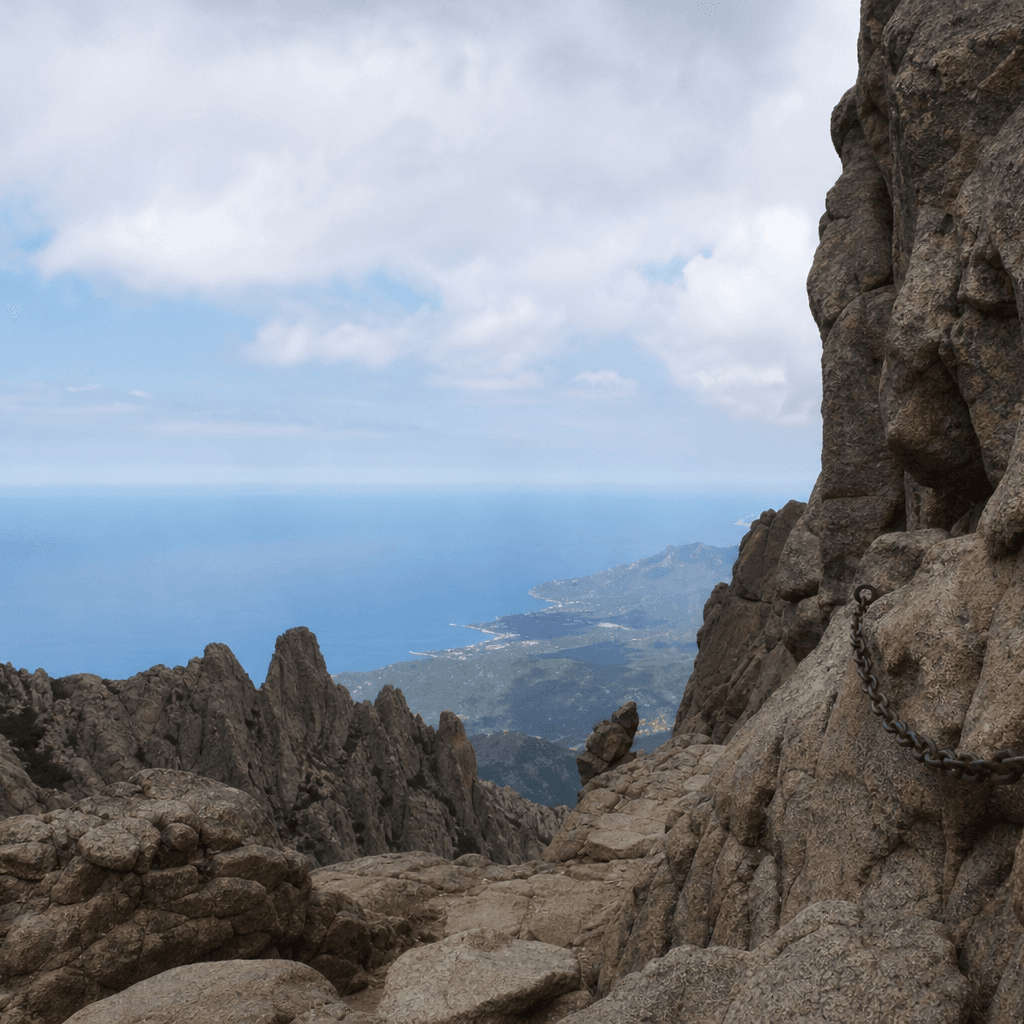
Stretching 180km along the jagged mountain spine of Corsica, it is a high-altitude odyssey between Calenzana in the north and Conca in the south. The route sits on the boundary between strenuous trekking and non-technical alpine scrambling, characterized by steep granite ridges, exposed chains, and the legendary Mediterranean sun. It requires not just physical endurance but a high degree of comfort with rocky, uneven terrain.
Note: Compiled from public sources — not a field report.
Europe's benchmark technical thru-hike—180 km of Corsican granite ridges, PNRC refuges, and sustained Class 3 scrambling on the northern half.
Mission Snapshot
Intensity Breakdown
Understanding what drives the overall route demand
Physical
75
Technical
95
Commitment
83
Primary driver: Technical seriousness
- Sustained Physical Output
- Significant Vertical Gain
- Technical Terrain Exposure
- High Remote Commitment
Major expeditions for elite teams. Sustained isolation and technical mastery required.
Full Route Breakdown
Complete stage overview with transparent route metrics. Values are shown as recorded in the route dataset and source links.
Distance
180.0 km
Ascent
12,000 m
Highest point
2,604 m
Start
Calenzana to Asco-Stagnu
Finish
Bavella to Conca
Use the KM / MI toggle in the main menu to switch units.
Route Profile
Fixed backcountry campground structure for this route
Operational Reality
Stage blocks in this dossier sum to 190 km (45 + 60 + 50 + 35 km) over 16 walking days; the headline 180 km follows PNRC/guidebook north–south totals that may exclude connector variants. Exact refuge-to-refuge distances vary by chosen variants and rest days. Not survey-grade GPS.
Route Considerations
Extreme heat, afternoon lightning, and slick granite when wet—start before dawn; do not climb technical stages in rain.
Extreme summer heat and storms
Corsica in July and August is punishingly hot, yet the high mountains generate sudden, sustained afternoon thunderstorms with frequent lightning.
Impact
Route-specific
Likelihood
Context-dependent
Tip
Start hiking before dawn (5 AM) to finish the stage and reach the next refuge before the afternoon storms and peak heat hit.
Technical granite scrambling
The northern stages (especially around the Monte Cinto bypass) feature highly exposed scrambling on bare rock that becomes remarkably slick when wet.
Impact
Route-specific
Likelihood
Context-dependent
Tip
Wear approach shoes or stiff boots with 'climbing zone' sticky rubber edges. Do not attempt technical stages in heavy rain.
Terrain & conditions
Conditions change quickly on the ground. Slow down on wet rock and pay more attention where paths narrow or exposure increases.
Impact
Moderate
Likelihood
Variable
Tip
Refer to stage notes and expert briefings; maintain focus on slick or exposed sections.
Why hike this route?
LANDSCAPE
The startling contrast of snow-dusted granite peaks framing views of the deep blue Mediterranean Sea.
VARIETY
From the lunar, mineral desolation of the high cirques to swimming in crystalline rock pools in the Spiscia ravines.
CULTURE & PLACE
The unique, fierce Corsican culture, the local charcuterie sold at refuges, and the intense camaraderie formed among hikers.
WHY GO
Europe's benchmark technical thru-hike—180 km of Corsican granite ridges, PNRC refuges, and sustained Class 3 scrambling on the northern half.
Expert Verdict
“The GR20 fully earns its reputation as Europe's ultimate trekking challenge. It sits on the boundary between high-altitude hiking and non-technical alpine scrambling. Success requires not only exceptional physical fitness but also the mental grit to handle sustained technical terrain and basic refuge living for over two weeks.”
Who This Is For
- EXPERT — Extensive multi-day alpine trekking experience. Essential comfort with severe exposure, rock scrambling, and carrying a heavy pack in extreme heat.
- PHYSICAL — Extreme. Historically, only around 50% of the people who start the GR20 successfully finish it due to physical exhaustion and injury.
- WATCH FOR — Bringing too heavy a backpack. Every gram feels like a kilo when you are pulling yourself up an iron chain on a vertical rock face.
- WATCH FOR — Starting hiking at 9 AM. Hikers will be caught by the afternoon thunderstorms or suffer heat exhaustion.
Plan This Hike
Key things to arrange before starting this route—practical tips first, then buttons that open curated picks (gear, maps, stays) where we list them.
Essential Gear
Recommended preparation for this route:
Scramble-ready boots and dawn-start discipline.
- Stiff boots with sticky rubber edges for granite
- Lightweight sun-protective layers—valley heat exceeds 35°C
- Trekking poles for knee-saving on 12,000 m cumulative descent
Stay Connected
Explore accommodation options for this trail:
Sporadic signal in cirques—plan conservatively.
- Download Corsica GR20 offline maps before Calenzana
- EU emergency 112; PGHM helicopter rescue is weather-dependent
- Share refuge booking PDF with a contact at home
Getting There
Travel and trail access for this route:
Calenzana (north) or Conca (south)—most hike north to south.
- Fly to Calvi or Bastia; bus/taxi to trailheads
- Pre-book every PNRC refuge night on official PNRC site
- Wild camping outside refuge zones is illegal and fined
Where to Stay
Explore accommodation options for this trail:
Mandatory PNRC refuge or rented tent pitch each night.
- Book dorm, tent, or pitch months ahead for August
- Refuges sell meals—carry cash/cards
- Keep pack under 12–14 kg for chain sections
Compare This Route
See how this route compares to similar hikes in overall demand and terrain profile.Compare routes by the shape of the effort, not only the headline score.
Berliner Höhenweg — The Zillertal High-Route
Closest overall match in demand profile
The Berliner Höhenweg (also known as the Zillertaler Runde) is one of the m...
Intensity
≈ same difficultyCopper Canyon
Lower overall intensity, similar terrain type
Deeper and wider than the Grand Canyon. The Copper Canyon (Barranca del Cob...
Intensity
Lower intensityExplore Alternatives
Broaden the picture with easier, harder, and nearby options.
Looking for something easier?
Lower intensity — helpful if this route feels like a stretch right now.
More hikes in this region
Nearby and regionally relevant routes for the next step in your search.
GR R2 — La Grande Traversée
reunion-island · france
Distance
140.0 km
Ascent
10,000 m
GR10 — The Pyrenees Traverse
Pyrenees (Atlantic to Mediterranean) · france
Distance
866.0 km
Ascent
48,000 m
The Jura Crest Trail
Jura Mountains (Doubs, Jura, Ain) · france
Distance
400.0 km
Ascent
12,000 m
Tour du Cézallier
Auvergne (Massif Central) · france
Distance
135.0 km
Ascent
3,950 m
GR5 — Grande Traversée des Alpes
Alps (Lake Geneva to the Mediterranean) · france
Distance
620.0 km
Ascent
30,000 m
The Stevenson Trail
Cévennes National Park (Haute-Loire, Lozère, Gard) · france
Distance
270.0 km
Ascent
7,650 m
Compare with any route
Pick any hike worldwide and open a full side-by-side comparison.
What You Need to Know
Essential answers about the demands, risks, and logistics of this route.
Q.How hard is this hike really?
Q.Do I need technical gear?
Q.Is water available on the route?
Q.What is the main risk?
Ready to hike Le GR20?
A final decision point after reviewing the route, risks, logistics, and alternatives.
This route is a strong match if you're comfortable with the effort level implied by an Intensity Score around 100/100 (Expedition), sustained hiking where this route requires it, and the terrain and exposure described in this guide.
Build your itinerary, stages, and logistics.
Looking for something easier, more challenging, or a different terrain profile?
Compare routes by intensity, terrain, and region.
Data: official trail documentation and topographic sources · About