Ausangate
Circuit
The high-altitude heart of the Inca world.
Duration
5 days
Route distance
70.0km
Vertical Gain
+4,200m
Max Altitude
5,200m
Mission Brief
The high-altitude heart of the Inca world.
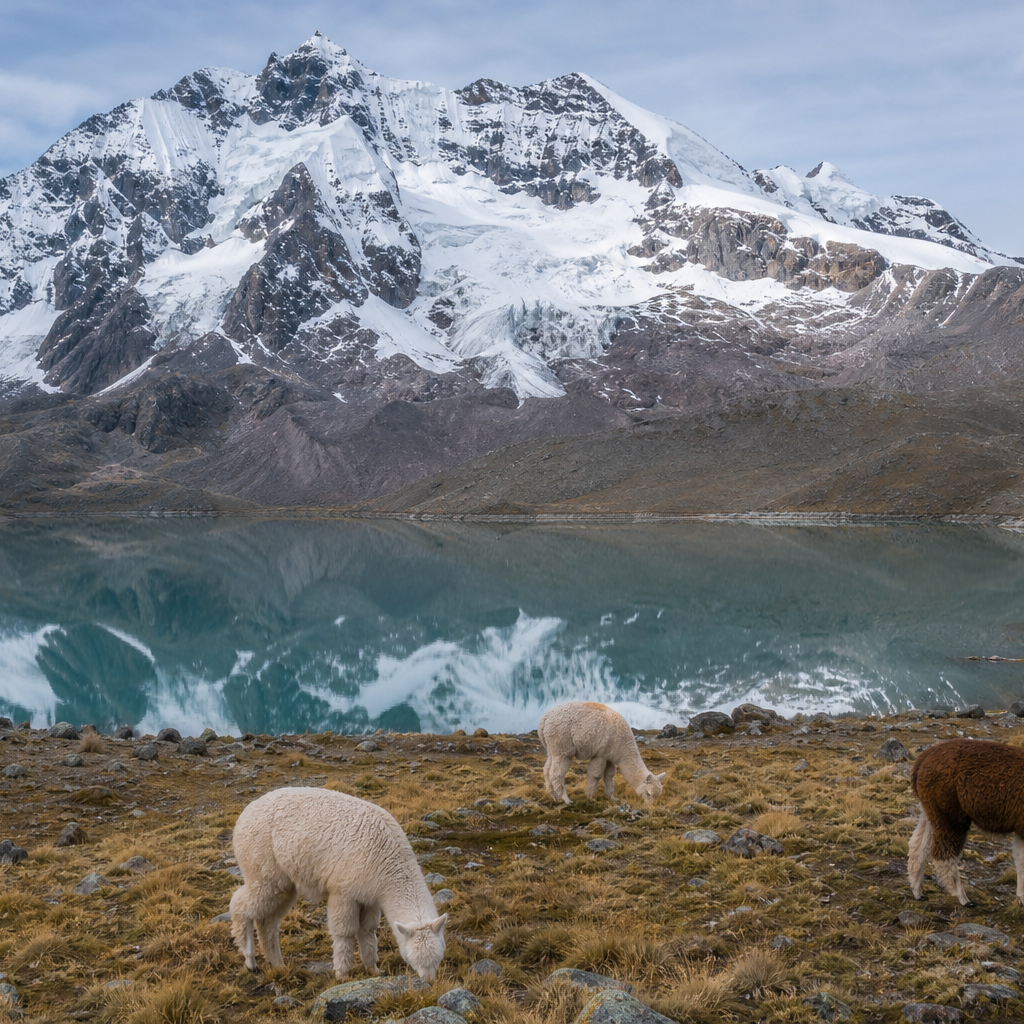
The Ausangate Circuit is a strenuous but scenic 70km loop around the highest peak in southern Peru. Unlike the busy Inca Trail, this trek is wild, high, and deeply traditional. The route moves through the Vilcanota Range, crossing multiple passes over 5,000m.
Hikers are treated to a surreal landscape of turquoise, red, and emerald-green glacial lakes (the 7 Lagoons), massive hanging glaciers, and the multi-colored mineral stripes of Vinicunca (Rainbow Mountain). You share the trail primarily with indigenous herders and their vast flocks of alpacas, offering a glimpse into a way of Andean life that has remained unchanged for centuries.
The Neon Lakes and the Rainbow Ridges. The 'X-Factor' is the surreal color palette. Standing on the Palomani Pass (5,200m), you look down at the Puca Cocha lakes—some deep red, others bright turquoise—set against the bl…
Mission Snapshot
Intensity Breakdown
Understanding what drives the overall route demand
Physical
82
Technical
73
Commitment
100
Primary driver: Commitment
- Sustained Physical Output
- Significant Vertical Gain
- Technical Terrain Exposure
- High Remote Commitment
High commitment routes with serious consequence, remote terrain, or sustained objective hazard.
Full Route Breakdown
Complete stage overview with transparent route metrics. Values are shown as recorded in the route dataset and source links.
Distance
70.0 km
Ascent
4,200 m
Highest point
5,200 m
Start
Tinki to Upis
Finish
Return to Tinki
Use the KM / MI toggle in the main menu to switch units.
Route Profile
Fixed backcountry campground structure for this route
Route Considerations
This route is generally safe, but these are the main factors to be aware of.
Persistent extreme topographical exposure
90% of the trek is above 4,200m, with several nights spent camping at 4,600m or higher. Recovery from fatigue is very slow in this thin air.
Impact
Route-specific
Likelihood
Context-dependent
Tip
Spend at least 3-5 days in Cusco (3,400m) BEFORE starting the trek; use pack horses to carry the main gear so you only wear a light daypack; carry emergency oxygen and a pulse oximeter.
Unpredictable glacier-driven weather
The massive ice fields of Ausangate create their own microclimate. Snowstorms and sub-zero temperatures can occur within minutes even in the 'dry' season.
Impact
Route-specific
Likelihood
Context-dependent
Tip
Equip yourself with a 4-season tent and a -15C rated sleeping bag; layering is critical; never attempt the high passes (Palomani/Jampa) in the afternoon when lightning risk is highest.
Remoteness and lack of emergency evacuation
There is no cell service and very few reliable emergency exit routes. A serious injury or illness requires hours or days of animal transport to reach a road.
Impact
Route-specific
Likelihood
Context-dependent
Tip
Always trek with a registered local guide or agency; carry a satellite messenger (InReach); ensure your travel insurance specifically covers high-altitude mountain rescue.
Why hike this route?
LANDSCAPE
The startling, almost unreal colors of the mineral ridges and the turquoise glacial lakes reflecting massive walls of ice.
VARIETY
The shift from hot springs and green valleys to stark, high-altitude tundras and frozen summit ridges.
CULTURE & PLACE
A deep, un-staged immersion into the Quechua herding culture where the alpaca is still the center of life.
STANDOUT
The Neon Lakes and the Rainbow Ridges. The 'X-Factor' is the surreal color palette. Standing on the Palomani Pass (5,200m), you look down at the Puca Cocha lakes—some deep red, others bright turquoise—set against the blinding white of the Ausangate glaciers. Combining this with…
Expert Verdict
“Ausangate is the most spiritually and geologically powerful trek in southern Peru. It is the 'anti-Inca Trail'. Experienced hikers often suggest that you do NOT underestimate the altitude. If you fly from Lima (sea level) and try to start this trek the next day, you will fail. Spend at least 4-5 days in Cusco (3,400m) or the Sacred Valley first. Don't just do the standard circuit; add the side trip to 'Rainbow Mountain' (Vinicunca) at sunset. Most day-trippers from Cusco leave by 2 PM, so if you arrive as a trekker at 4 PM, you will have one of the area's most famous views entirely to yourself. Also, hire an arriero from the village of Tinki—it supports the local economy and ensures you have a horse for emergencies. Finally, bring a high-quality down jacket and a sleeping bag rated for -15°C; the cold at the Puca Cocha camp is bone-chilling but the view of the star-filled sky over the glacier is life-changing. For this itinerary, Ausangate Circuit's own metrics set the effort band: 70km (43 miles) for the full, 4200 m gain and 6-8 hours on foot.”
Who This Is For
- EXPERT (HIGH ALTITUDE) — For seasoned trekkers who have already conquered the Inca Trail or Salkantay and want the 'real' Andes. You should be comfortable with extreme cold and very thin air—you spend almost the entire trek above 4,200m. This is for people who value silence, tradition, and geology over…
- PHYSICAL — Extremely High. Crossing multiple 5,000-meter passes in consecutive days is punishing. The lack of oxygen at these heights makes even a 10km day feel like 30km at sea level. Your heart and lungs will be at peak capacity…
- WATCH FOR — Stopping in Cusco for only one day before starting; this is the leading cause of altitude sickness evacuations on Ausangate.
- WATCH FOR — Wearing boots that aren't broken in; the steep descents on rocky ground will destroy your toes if your shoes don't fit perfectly.
Plan This Hike
Key things to arrange before starting this route—practical tips first, then buttons that open curated picks (gear, maps, stays) where we list them.
Altitude Acclimatization
Practical next step for this hike:
Spend 3–5 days in Cusco before the trek.
- Most of the circuit stays above 4,200 m
- Palomani Pass reaches 5,200 m — AMS risk is real
- Carry pulse oximeter and emergency oxygen if self-guided
Pack Horses
Recommended preparation for this route:
Arrieros and horses are standard from Tinki.
- Hire horses to carry camp gear — daypack only on passes
- Supports local Quechua herding communities
- Emergency horse access if altitude forces a retreat
Cold-Weather Kit
Recommended preparation for this route:
4-season tent and −15°C bag for high camps.
- Puca Cocha camps drop below freezing at night
- Glacier glasses and SPF 50+ — UV extreme above 5,000 m
- Waterproof dry bag for sleeping gear in afternoon sleet
Rainbow Mountain Side Trip
Practical next step for this hike:
Vinicunca add-on — visit after day-trippers leave.
- Most Cusco buses depart Vinicunca by 2 p.m.
- Trekkers arriving ~4 p.m. often have ridges quieter
- Adds 3–4 hours — confirm with your arriero
Compare This Route
See how this route compares to similar hikes in overall demand and terrain profile.Compare routes by the shape of the effort, not only the headline score.
Vale do Pati
Closest overall match in demand profile
Vale do Pati is a remote multi-day trekking destination within the Chapada ...
Intensity
Higher intensityVolcán Barú
Lower overall intensity, similar terrain type
Volcán Barú is Panama's highest summit (3,474 m): a brutal night hike from ...
Intensity
Lower intensityCordillera Real Traverse
Higher physical or technical demand
The Cordillera Real Traverse is considered by many high-altitude trekkers t...
Intensity
Higher intensityExplore Alternatives
Broaden the picture with easier, harder, and nearby options.
Looking for something easier?
Lower intensity — helpful if this route feels like a stretch right now.
Want more challenge?
Higher intensity — for when you are ready for a bigger physical or technical step.
More hikes in this region
Nearby and regionally relevant routes for the next step in your search.
Huayhuash Circuit
ancash-huaraz · peru
Distance
130.0 km
Ascent
8,500 m
Salkantay Trek
cusco · peru
Distance
74.0 km
Ascent
3,200 m
Alpamayo Circuit
ancash-huaraz · peru
Distance
130.0 km
Ascent
7,200 m
Cordillera Blanca Traverse
ancash-department-central-andes · peru
Distance
250.0 km
Ascent
20,000 m
Santa Cruz Trek
cordillera-blanca · peru
Distance
50.0 km
Ascent
2,000 m
The Classic Inca Trail
cusco · peru
Distance
42.0 km
Ascent
2,200 m
Compare with any route
Pick any hike worldwide and open a full side-by-side comparison.
What You Need to Know
Essential answers about the demands, risks, and logistics of this route.
Q.How hard is this hike really?
Q.Do I need technical gear?
Q.Is water available on the route?
Q.What is the main risk?
Ready to hike Ausangate Circuit?
A final decision point after reviewing the route, risks, logistics, and alternatives.
This route is a strong match if you're comfortable with the effort level implied by an Intensity Score around 88/100 (Severe), sustained hiking where this route requires it, and the terrain and exposure described in this guide.
Build your itinerary, stages, and logistics.
Looking for something easier, more challenging, or a different terrain profile?
Compare routes by intensity, terrain, and region.
Data: official trail documentation and topographic sources · About