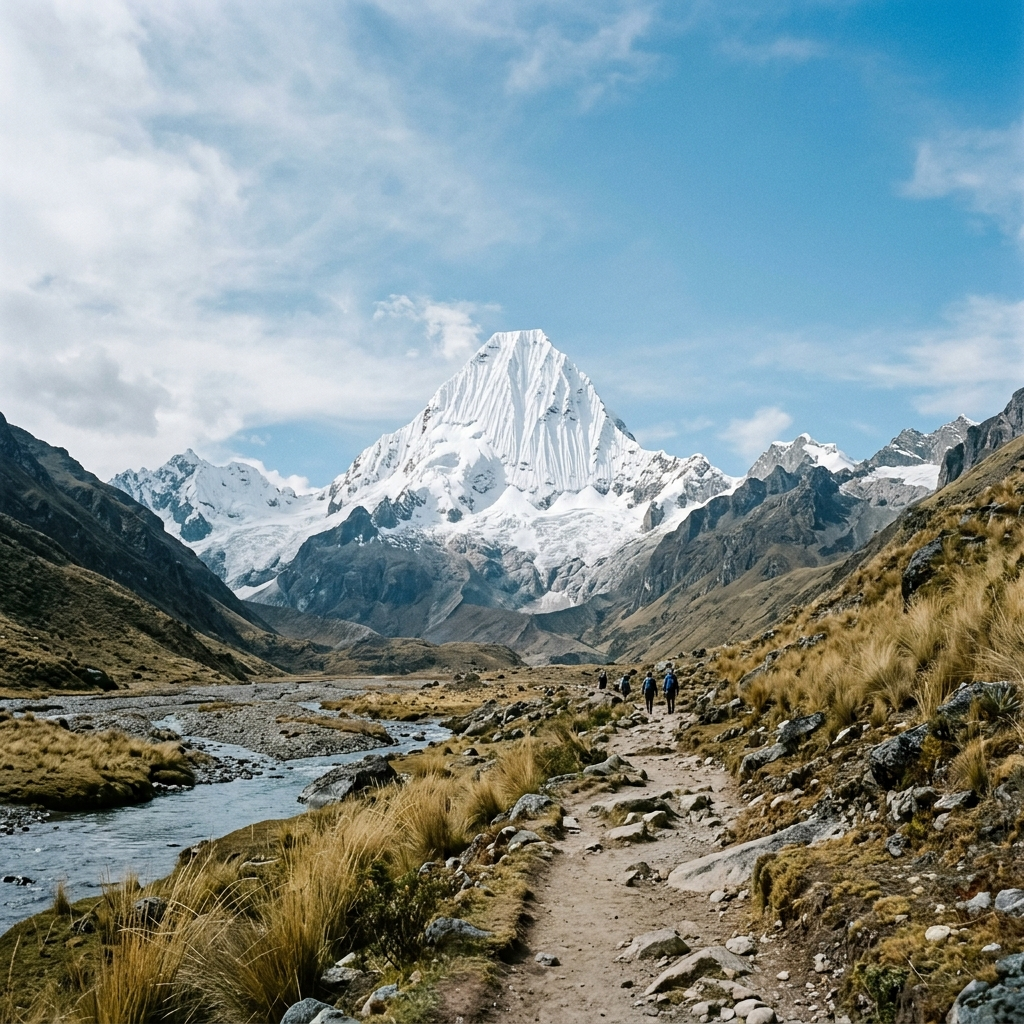
Alpamayo
Circuit
~130 km circuit starting and ending near Cashapampa, typically requiring 10–12 days.
Duration
11 days
Route distance
130.0km
Vertical Gain
+7,200m
Max Altitude
4,850m
Mission Brief
The face of the most beautiful mountain.
The Alpamayo Circuit (also known as the Cedros-Alpamayo trek) is an 11-day high-altitude trek in the Cordillera Blanca. While the technical climb of Alpamayo (5,947m) is world-famous, the circuit trek allows non-climbers to experience the mountain from all sides. The route passes through deep glacial valleys and over multiple 4,700m+ passes, offering a full 360-degree perspective of the ice pyramid that was voted 'The Most Beautiful Mountain in the World' at the 1966 Munich photo exhibition.
The ultimate Cordillera Blanca challenge—130 km of rugged valleys, turquoise alpine lakes, and constant 4,700m+ passes.
Mission Snapshot
Intensity Breakdown
Understanding what drives the overall route demand
Physical
84
Technical
82
Commitment
100
Primary driver: Commitment
- Sustained Physical Output
- Significant Vertical Gain
- Technical Terrain Exposure
- High Remote Commitment
Major expeditions for elite teams. Sustained isolation and technical mastery required.
Full Route Breakdown
Complete stage overview with transparent route metrics. Values are shown as recorded in the route dataset and source links.
Distance
130.0 km
Ascent
7,200 m
Highest point
4,850 m
Start
Through the Cedros
Finish
The High Divide
Use the KM / MI toggle in the main menu to switch units.
Route Profile
Operational Reality
Itinerary covers the full ~130 km circuit over 11 days; campsite spacing and daily distance depend on mule/support pace. Not survey-grade GPS.
Route Considerations
Severe altitude sickness risk, freezing night temperatures (-15°C), and steep loose scree on high mountain passes.
Extreme altitude succession
You cross a pass over 4,700m nearly every day for a week, providing no relief for the body.
Impact
Route-specific
Likelihood
Context-dependent
Tip
Start with a perfectly graduated acclimatization schedule in Huaraz; carry a pulse oximeter; have an emergency horse available; stay hydrated with at least 4L of water a day.
Rockfall on high passes
Some of the high passes (like the Gara Gara Pass at 4,830m) have loose scree and potential for falling rocks.
Impact
Route-specific
Likelihood
Context-dependent
Tip
Cross high passes early in the morning before the sun softens the ice/soil; wear a helmet if visibility is low or conditions are notably unstable.
Altitude Warning
Potential altitude-related conditions include AMS, HAPE, and HACE. Adequate acclimatization is essential.
Impact
Route-specific
Likelihood
Context-dependent
Tip
Strict adherence to hydration and gradual ascent protocols (climb high, sleep low).
Why hike this route?
LANDSCAPE
The startling, spectacular beauty of Alpamayo—a fluted pyramid of white ice that looks like it was designed by a master architect.
VARIETY
The shift from deep, verdant glacial valleys with turquoise lakes to the stark, windswept moonscapes of the high passes.
CULTURE & PLACE
A rare glimpse into the lives of remote Andean communities who still graze their livestock in the high pastures of the Cordillera Blanca.
WHY GO
The ultimate Cordillera Blanca challenge—130 km of rugged valleys, turquoise alpine lakes, and constant 4,700m+ passes.
Expert Verdict
“The Alpamayo Circuit is the most aesthetically rewarding trek in the Andes, but it demands respect. It’s significantly harder and more remote than the Santa Cruz trek. Experienced hikers often suggest spending at least 4-5 days in Huaraz doing acclimatization hikes (like Laguna 69 and Churup) before you start. If you feel even a hint of altitude sickness on day 1, do not continue. The campsite at Jancarurish is the highlight of the trip—ensure your itinerary allows for two nights here if possible; the sunset illumination of Alpamayo's North Face is a spiritual experience for any mountain lover. Also, bring the highest-quality gear you own; your tent and sleeping bag are your only sanctuary from the freezing Andean nights. Finally, hire a reputable local guide and muleteers—not just for the load-bearing, but for their incredible knowledge of the unpredictable mountain weather and the hidden history of the Quebrada Cedros. Alpamayo Circuit's current record supports planning from 130km (80 miles) and 5-8 hours on foot, with 7200 m of gain.”
Who This Is For
- EXPERT (HIGH ALTITUDE) — For serious trekkers who have already completed the Santa Cruz or Huayhuash and are looking for something deeper, longer, and more remote. You should be comfortable being 'off the grid' for 11 days, sleeping in freezing conditions, and crossing high mountain passes (4,700m+) on…
- PHYSICAL — Extremely High. The sheer cumulative fatigue is the defining feature of the Alpamayo Circuit. You aren't just climbing one pass; you are climbing nearly 1000m and descending 1000m almost every single day for a week. The…
- WATCH FOR — Rushing the acclimatization; skipping days in Huaraz is the #1 reason people fail this trek within the first three days.
- WATCH FOR — Bringing an 'average' sleeping bag; if your bag isn't rated for at least -15°C comfort, you will spend your nights shivering instead of recovering.
Plan This Hike
Key things to arrange before starting this route—practical tips first, then buttons that open curated picks (gear, maps, stays) where we list them.
Essential Gear
Recommended preparation for this route:
High-altitude camping—warmth, shelter, and water treatment.
- 4-season tent and sleeping bag rated to -15°C comfort
- Heavy down parka and windproof shell layers
- Reliable water filter for glacial stream refills
Stay Connected
Explore accommodation options for this trail:
Completely off-grid—no cellular signal for 11 days.
- Carry a satellite messenger (e.g., Garmin inReach)
- Download offline topo maps of the Cordillera Blanca
- Bring a robust solar panel or high-capacity power bank
Getting There
Travel and trail access for this route:
Lima to Huaraz, then private transport to Cashapampa.
- Take a premium bus (e.g., Cruz del Sur) from Lima to Huaraz
- Organize private collectivo/taxi to the Cashapampa trailhead
- Acclimatize in Huaraz for 3-4 days before starting
Where to Stay
Explore accommodation options for this trail:
100% wilderness camping—no mountain huts/lodges.
- Camp only at designated park campsites
- Huaraz has excellent hostels and hotels for pre/post-trek
- Mule support team sets up camp daily (if hired)
Compare This Route
See how this route compares to similar hikes in overall demand and terrain profile.Compare routes by the shape of the effort, not only the headline score.
Berliner Höhenweg — The Zillertal High-Route
Closest overall match in demand profile
The Berliner Höhenweg (also known as the Zillertaler Runde) is one of the m...
Intensity
≈ same difficultyCopper Canyon
Lower overall intensity, similar terrain type
Deeper and wider than the Grand Canyon. The Copper Canyon (Barranca del Cob...
Intensity
Lower intensityExplore Alternatives
Broaden the picture with easier, harder, and nearby options.
Looking for something easier?
Lower intensity — helpful if this route feels like a stretch right now.
More hikes in this region
Nearby and regionally relevant routes for the next step in your search.
Huayhuash Circuit
ancash-huaraz · peru
Distance
130.0 km
Ascent
8,500 m
Cordillera Blanca Traverse
ancash-department-central-andes · peru
Distance
250.0 km
Ascent
20,000 m
Ausangate Circuit
cusco-department-southern-andes · peru
Distance
70.0 km
Ascent
4,200 m
Salkantay Trek
cusco · peru
Distance
74.0 km
Ascent
3,200 m
Santa Cruz Trek
cordillera-blanca · peru
Distance
50.0 km
Ascent
2,000 m
The Classic Inca Trail
cusco · peru
Distance
42.0 km
Ascent
2,200 m
Compare with any route
Pick any hike worldwide and open a full side-by-side comparison.
What You Need to Know
Essential answers about the demands, risks, and logistics of this route.
Q.How hard is this hike really?
Q.Do I need technical gear?
Q.Is water available on the route?
Q.What is the main risk?
Ready to hike Alpamayo Circuit?
A final decision point after reviewing the route, risks, logistics, and alternatives.
This route is a strong match if you're comfortable with the effort level implied by an Intensity Score around 100/100 (Expedition), sustained hiking where this route requires it, and the terrain and exposure described in this guide.
Build your itinerary, stages, and logistics.
Looking for something easier, more challenging, or a different terrain profile?
Compare routes by intensity, terrain, and region.
Data: official trail documentation and topographic sources · About