Panorama
Ridge
The crown jewel of the Sea-to-Sky corridor.
Duration
1 day
Route distance
30.0km
Vertical Gain
+1,520m
Max Altitude
2,133m
Mission Brief
The crown jewel of the Sea-to-Sky corridor.
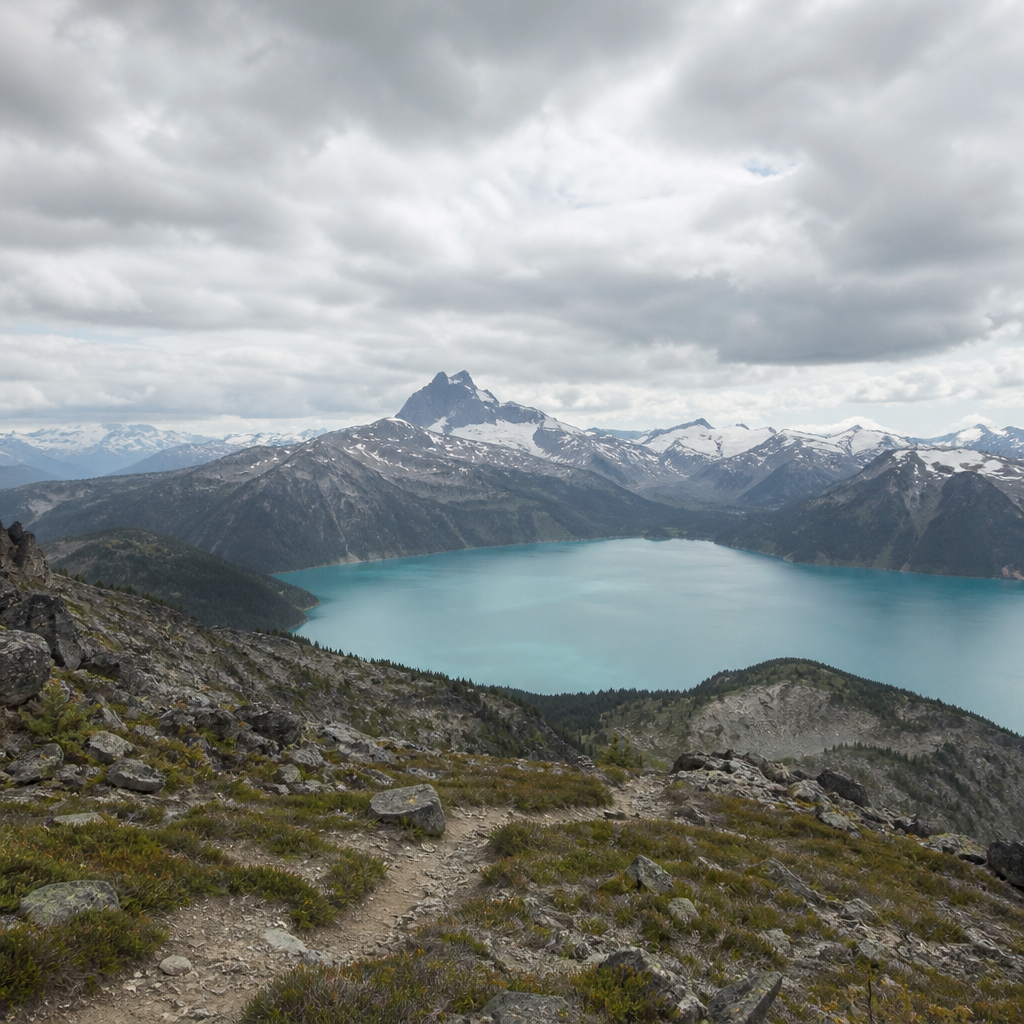
Panorama Ridge offers one of the most rewarding summit views in British Columbia, providing a 360-degree alpine panorama that encompasses the turquoise waters of Garibaldi Lake, the iconic volcanic spire of Black Tusk, and the vast Helm Glacier. The trail starts at the Rubble Creek parking lot and winds through ancient forests and high alpine meadows (Taylor Meadows) before a final rocky ascent to the ridge. The glacier-fed lake's color looks almost artificial against the grey rock and deep green forests.
The Turquoise Glow and the Spire. The defining moment is the perspective on Garibaldi Lake from the ridge. From 600 meters directly above the water, you can see the unique way the 'glacial flour' (fine rock dust) reflec…
Mission Snapshot
Intensity Breakdown
Understanding what drives the overall route demand
Physical
56
Technical
50
Commitment
50
Primary driver: Physical load
- Significant Vertical Gain
Serious physical effort or sustained terrain friction. Demanding but not expedition-scale.
Full Route Breakdown
Complete stage overview with transparent route metrics. Values are shown as recorded in the route dataset and source links.
Distance
30.0 km
Ascent
1,520 m
Highest point
2,133 m
Start
Rubble Creek
Finish
Rubble Creek
Use the KM / MI toggle in the main menu to switch units.
Route Profile
Out-and-back day-hike structure
Operational Reality
Distance 30 km return and elevation 580–2,133 m with 1,520 m gain. Topography interpolates the first-6 km switchbacks, meadows, and final 400 m ridge ascent, then the return. Round-trip from Rubble Creek. Sources: BC Parks Garibaldi page and Wikipedia Garibaldi Provincial Park.
Route Considerations
This route is generally safe, but these are the main factors to be aware of.
Physical exhaustion long day
The round-trip is 30km with 1,500m of elevation gain; many hikers underestimate the time needed (10-12 hours).
Impact
Route-specific
Likelihood
Context-dependent
Tip
Start before 7:00 AM; carry at least 3 liters of water; take a high-energy 'summit' snack; be prepared to turn back if you haven't reached the ridge by 2 PM.
Black and grizzly bear activity
Taylor Meadows is a prime foraging area for bears, especially in berry season (August).
Impact
Route-specific
Likelihood
Context-dependent
Tip
Make noise while hiking; carry bear spray in an accessible holster; if you see a bear, give it a wide berth and wait for it to move along.
Alpine weather and visibility
The ridge is very high and exposed; clouds can roll in from the Pacific, dropping visibility to zero and making the final scramble dangerous.
Impact
Route-specific
Likelihood
Context-dependent
Tip
Check the Whistler alpine forecast; carry a windproof/waterproof shell; if the ridge is shrouded in thick cloud, wait for a window or descend.
Why hike this route?
LANDSCAPE
The neon turquoise glow of Garibaldi Lake and the dramatic, dark volcanic core of Black Tusk.
VARIETY
The transition from lush Douglas Fir forests to vibrant alpine wildflower meadows and finally the stark, rocky moonscape of the ridge.
CULTURE & PLACE
A Vancouver 'rite of passage'—trekking the ridge is a bucket-list achievement for every local hiker.
STANDOUT
The Turquoise Glow and the Spire. The defining moment is the perspective on Garibaldi Lake from the ridge. From 600 meters directly above the water, you can see the unique way the 'glacial flour' (fine rock dust) reflects sunlight, creating the lake's distinctive neon turquoise…
Expert Verdict
“Panorama Ridge is often regarded as one of the most rewarding day hikes in the Garibaldi region. The turquoise glow of Garibaldi Lake from 600m above is consistently described as one of BC's most striking natural viewpoints. The meadows (Taylor Meadows) are a highlight in their own right during wildflower season (late July-early August). Practical notes: Average moving pace is about 3 km/h on switchbacks, dropping to 1-2 km/h on the final scree section. Carry at least 2-3 litres of water as there are no sources above Taylor Meadows. The ridge is often 10-15°C colder than the parking lot and can be windy even when the valley is calm. Snowfields above the meadows can obscure the trail until early July—microspikes recommended in June. In August, expect moderate crowds; the trail feels busy at the meadows but thins significantly toward the ridge. Bring a headlamp—many hikers finish the last 5km of the descent in the dark.”
Who This Is For
- INTERMEDIATE TO ADVANCED — Ideal for hikers who have mastered 15-20km day hikes and are ready for a full-day endurance test. You should be comfortable with basic rock scrambling and extended high-topographical exposure.
- PHYSICAL — High. The 1,500m elevation gain and 30km round trip make this a grueling physical challenge. Your legs will be tested on the final scree slope and during the 15km descent back to the car.
- WATCH FOR — Missing the 7 AM pass release; the trail is strictly policed and access may be denied without prior booking without a pass.
- WATCH FOR — Underestimating the descent; 15km of downhill switchbacks at the end of a 30km day is strenuous on the knees.
Plan This Hike
Key things to arrange before starting this route—practical tips first, then buttons that open curated picks (gear, maps, stays) where we list them.
Essential Gear
Recommended preparation for this route:
A 10–12 hour alpine day: boots, layers, and a headlamp.
- High-quality hiking boots for scree and slabs
- Headlamp for the likely late return on switchbacks
- Bear spray in an accessible holster
Stay Connected
Explore accommodation options for this trail:
Signal often drops in forest and returns on the ridge.
- Download an offline map before Rubble Creek
- Fill water at Taylor Meadows or Garibaldi Lake — none on the final 400 m
- Squamish Search and Rescue covers this corridor
Getting There
Travel and trail access for this route:
Rubble Creek trailhead on Highway 99 between Squamish and Whistler.
- BC Parks day-use pass is mandatory in peak season
- Passes release two days ahead at 7 AM and book out fast
- Parking lot often fills by 8 AM on weekends
Where to Stay
Explore accommodation options for this trail:
Backcountry camping is reserved; no camping on the ridge.
- Taylor Meadows or Garibaldi Lake camps (BC Parks reservations)
- Day hikers typically base in Squamish or Whistler
- Best window mid-July to late September
Compare This Route
See how this route compares to similar hikes in overall demand and terrain profile.Compare routes by the shape of the effort, not only the headline score.
Urnerboden to Altdorf
Closest overall match in demand profile
Technically Stage 8 of the Swiss Via Alpina, this traverse crosses the bord...
Intensity
Lower intensitySeefelder Spitze — The Karwendel Crown
Lower overall intensity, similar terrain type
Rising sharply from the Seefeld plateau, the Seefelder Spitze (2,221m) is a...
Intensity
Lower intensityCerro Chirripó
Higher physical or technical demand
Route Typology: High-Altitude Páramo Ascent. Cerro Chirripó is Costa Rica's...
Intensity
Higher intensityExplore Alternatives
Broaden the picture with easier, harder, and nearby options.
Looking for something easier?
Lower intensity — helpful if this route feels like a stretch right now.
Want more challenge?
Higher intensity — for when you are ready for a bigger physical or technical step.
More hikes in this region
Nearby and regionally relevant routes for the next step in your search.
Skyline Trail
alberta · canada
Distance
44.1 km
Ascent
1,400 m
Slim’s River West Trail
kluane-national-park-yukon · canada
Distance
45.0 km
Ascent
1,400 m
The East Coast Trail
newfoundland · canada
Distance
336.0 km
Ascent
—
The West Coast Trail
Vancouver Island (British Columbia) · canada
Distance
75.0 km
Ascent
1,813 m
Berg Lake Trail
british-columbia · canada
Distance
42.0 km
Ascent
800 m
Tonquin Valley
alberta · canada
Distance
44.0 km
Ascent
700 m
Compare with any route
Pick any hike worldwide and open a full side-by-side comparison.
What You Need to Know
Essential answers about the demands, risks, and logistics of this route.
Q.How hard is this hike really?
Q.Do I need technical gear?
Q.Is water available on the route?
Q.What is the main risk?
Ready to hike Panorama Ridge?
A final decision point after reviewing the route, risks, logistics, and alternatives.
This route is a strong match if you're comfortable with the effort level implied by an Intensity Score around 61/100 (Hard), sustained hiking where this route requires it, and the terrain and exposure described in this guide.
Build your itinerary, stages, and logistics.
Looking for something easier, more challenging, or a different terrain profile?
Compare routes by intensity, terrain, and region.
Data: official trail documentation and topographic sources · About