Everest Base
Camp
~130 km out-and-back from Lukla, typically 12–14 days with acclimatization rest days.
Duration
12 days
Route distance
130.0km
Vertical Gain
+2,700m
Max Altitude
5,644m
Mission Brief
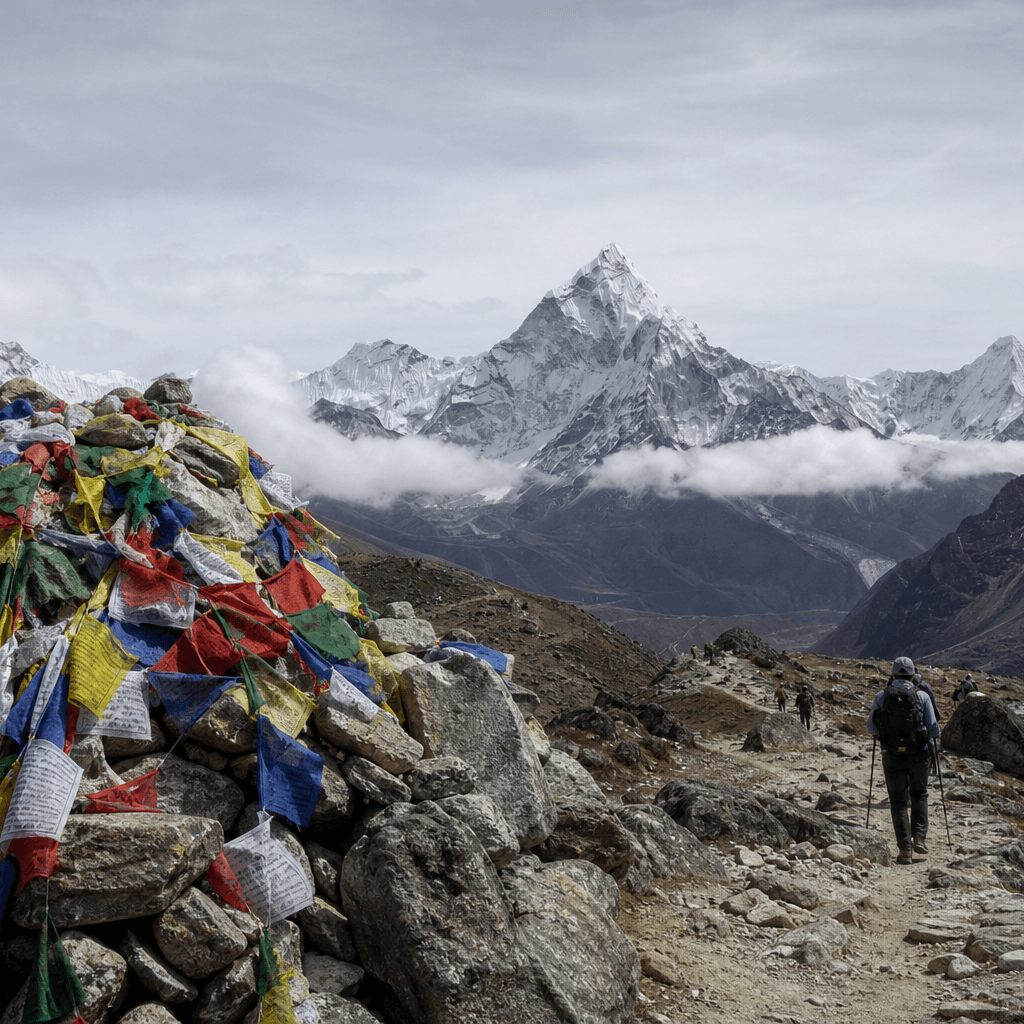
The Everest Base Camp trek is the standard Khumbu introduction: a tea-house route from Lukla through Namche Bazaar and Tengboche to Gorak Shep, Everest Base Camp (5,364 m), and the dawn climb of Kala Patthar (5,644 m) for the clearest Everest view.
It is not technical mountaineering, but sustained time above 4,000 m makes acclimatization and pacing the real challenge—not daily scrambling.
The classic Khumbu tea-house trek to Everest Base Camp and Kala Patthar—structured acclimatization, Sherpa culture, and the most recognizable Himalayan skyline without high-pass navigation.
Mission Snapshot
Intensity Breakdown
Understanding what drives the overall route demand
Physical
81
Technical
64
Commitment
83
Primary driver: Commitment
- Sustained Physical Output
- Significant Vertical Gain
- Technical Terrain Exposure
- High Remote Commitment
Major expeditions for elite teams. Sustained isolation and technical mastery required.
Full Route Breakdown
Complete stage overview with transparent route metrics. Values are shown as recorded in the route dataset and source links.
Distance
130.0 km
Ascent
2,700 m
Highest point
5,644 m
Start
Lukla to Phakding
Finish
Lukla to Kathmandu
Use the KM / MI toggle in the main menu to switch units.
Operational Reality
Stage distances sum to 120 km for the standard Lukla–EBC–Kala Patthar out-and-back, including the Namche (5 km) and Dingboche (4 km) acclimatization day walks in this itinerary. Published guidebook totals often cite ~130 km when counting optional side trips or alternate stage splits. Not survey-grade GPS.
Route Considerations
Primary risks are AMS above 4,000 m, Lukla flight weather, and cold nights in basic lodges—not exposure scrambling on the main trail.
Acute mountain sickness ams
The trek reaches extreme altitudes where oxygen levels are less than 50% of sea level. AMS is the single greatest threat to success and safety.
Impact
Route-specific
Likelihood
Context-dependent
Tip
Follow a strict acclimatization schedule with at least 2 rest days; drink 4L of water daily; climb high and sleep low; carry Diamox (after consulting a doctor); descend immediately if severe headache or loss of coordination occurs.
The lukla flight
Tenzing-Hillary Airport in Lukla has a short runway and weather-dependent operations—flight cancellations are common.
Impact
Route-specific
Likelihood
Context-dependent
Tip
Build at least 2-3 buffer days into your itinerary for flight delays; be prepared to stay in Lukla or Kathmandu if flights are grounded; consider helicopter alternatives if budget allows and delays are lengthy.
Altitude Warning
Potential altitude-related conditions include AMS, HAPE, and HACE. Adequate acclimatization is essential.
Impact
Route-specific
Likelihood
Context-dependent
Tip
Strict adherence to hydration and gradual ascent protocols (climb high, sleep low).
Why hike this route?
LANDSCAPE
Surround-sound Himalayas. You are looking at 8,000m peaks from every angle.
VARIETY
The transition from lush rhododendron forests to the moon-like landscape of the Khumbu glacier.
CULTURE & PLACE
The deep, spiritual connection to the Sherpa people and their monasteries.
WHY GO
The classic Khumbu tea-house trek to Everest Base Camp and Kala Patthar—structured acclimatization, Sherpa culture, and the most recognizable Himalayan skyline without high-pass navigation.
Expert Verdict
“EBC is the Everest of hikes. Experienced hikers often suggest treating Base Camp as one waypoint rather than the whole goal; the real prize is the Sherpa culture and the view from Kala Patthar. And whatever you do, go slow—being the first one to the teahouse is the fastest way to get altitude sickness. For this itinerary, Everest Base Camp's own metrics set the effort band: 130km, 2700 m gain and 5-7 hours on foot.”
Who This Is For
- ADVANCED — Significant experience with multi-day hiking is necessary. While not a technical climb, you should be comfortable with thin air, basic lodge conditions, and continuous walking at high altitudes.
- PHYSICAL — High. The primary strain is the lack of oxygen. Every step above 4,000m feels like three, and your body will be under constant stress to maintain homeostasis.
- WATCH FOR — Ascending too quickly from Namche to Tengboche.
- WATCH FOR — Not drinking enough water (you should aim for 4L per day to fight AMS).
Plan This Hike
Key things to arrange before starting this route—practical tips first, then buttons that open curated picks (gear, maps, stays) where we list them.
Essential Gear
Recommended preparation for this route:
Tea-house trek—warm layers and altitude-ready kit.
- Down jacket rated to −15°C; Gore-Tex shell for afternoon showers
- Broken-in waterproof boots; Category 4 sunglasses
- Water purification or UV filter—bottled water is costly and discouraged
Stay Connected
Explore accommodation options for this trail:
Patchy signal—offline maps and flexible Lukla plans.
- Download Khumbu offline maps before Lukla
- Build 2–3 buffer days for Lukla flight weather
- Travel insurance with helicopter evacuation cover is standard advice
Getting There
Travel and trail access for this route:
Lukla flight is the standard Khumbu entry.
- Kathmandu → Lukla (Tenzing-Hillary) flights—book flexible tickets
- Sagarmatha NP + Khumbu rural municipality permits at Monjo/Lukla
- Registered guide may be required—verify current Nepal rules before booking
Where to Stay
Explore accommodation options for this trail:
Tea houses every village—basic above Dingboche.
- Reserve busy hubs in peak weeks when possible
- Carry cash for lodges, charging, and hot showers
- Sleeping bag liner useful in unheated high lodges
Compare This Route
See how this route compares to similar hikes in overall demand and terrain profile.Compare routes by the shape of the effort, not only the headline score.
Piuquenes Pass
Closest overall match in demand profile
Following the historic path used by the Army of the Andes in 1817, this 6-d...
Intensity
Lower intensityGR10 — The Pyrenees Traverse
Lower overall intensity, similar terrain type
The GR10 is a monumental, 866km trans-Pyrenean thru-hike that traverses the...
Intensity
Lower intensityKangchendzonga Himal
Higher physical or technical demand
The frontier of the Himalaya. The Kangchendzonga trek is one of Asia's most...
Intensity
Higher intensityExplore Alternatives
Broaden the picture with easier, harder, and nearby options.
Looking for something easier?
Lower intensity — helpful if this route feels like a stretch right now.
Want more challenge?
Higher intensity — for when you are ready for a bigger physical or technical step.
More hikes in this region
Nearby and regionally relevant routes for the next step in your search.
Gokyo Lakes & Cho La Pass
khumbu-everest · nepal
Distance
120.0 km
Ascent
3,200 m
Three Passes Trek
khumbu-everest · nepal
Distance
170.0 km
Ascent
7,000 m
Manaslu Circuit
manaslu-conservation-area · nepal
Distance
180.0 km
Ascent
4,200 m
Makalu Base Camp
sankhuwasabha-eastern-nepal · nepal
Distance
150.0 km
Ascent
4,200 m
Tsho Rolpa Trek
rolwaling-valley · nepal
Distance
120.0 km
Ascent
3,200 m
Annapurna Circuit
annapurna-conservation-area · nepal
Distance
230.0 km
Ascent
4,500 m
Compare with any route
Pick any hike worldwide and open a full side-by-side comparison.
What You Need to Know
Essential answers about the demands, risks, and logistics of this route.
Q.How hard is this hike really?
Q.Do I need technical gear?
Q.Is water available on the route?
Q.What is the main risk?
Ready to hike Everest Base Camp?
A final decision point after reviewing the route, risks, logistics, and alternatives.
This route is a strong match if you're comfortable with the effort level implied by an Intensity Score around 90/100 (Expedition), sustained hiking where this route requires it, and the terrain and exposure described in this guide.
Build your itinerary, stages, and logistics.
Looking for something easier, more challenging, or a different terrain profile?
Compare routes by intensity, terrain, and region.