The Sella-Herbetet
Traverse
~22 km loop starting and ending at Valnontey in Gran Paradiso National Park.
Duration
1 day
Route distance
22.0km
Vertical Gain
+1,150m
Max Altitude
2,584m
Mission Brief
The Sella-Herbetet Traverse (Traversata Sella–Herbetet) is a primary high-altitude loop within the Parco Nazionale del Gran Paradiso, Aosta Valley.
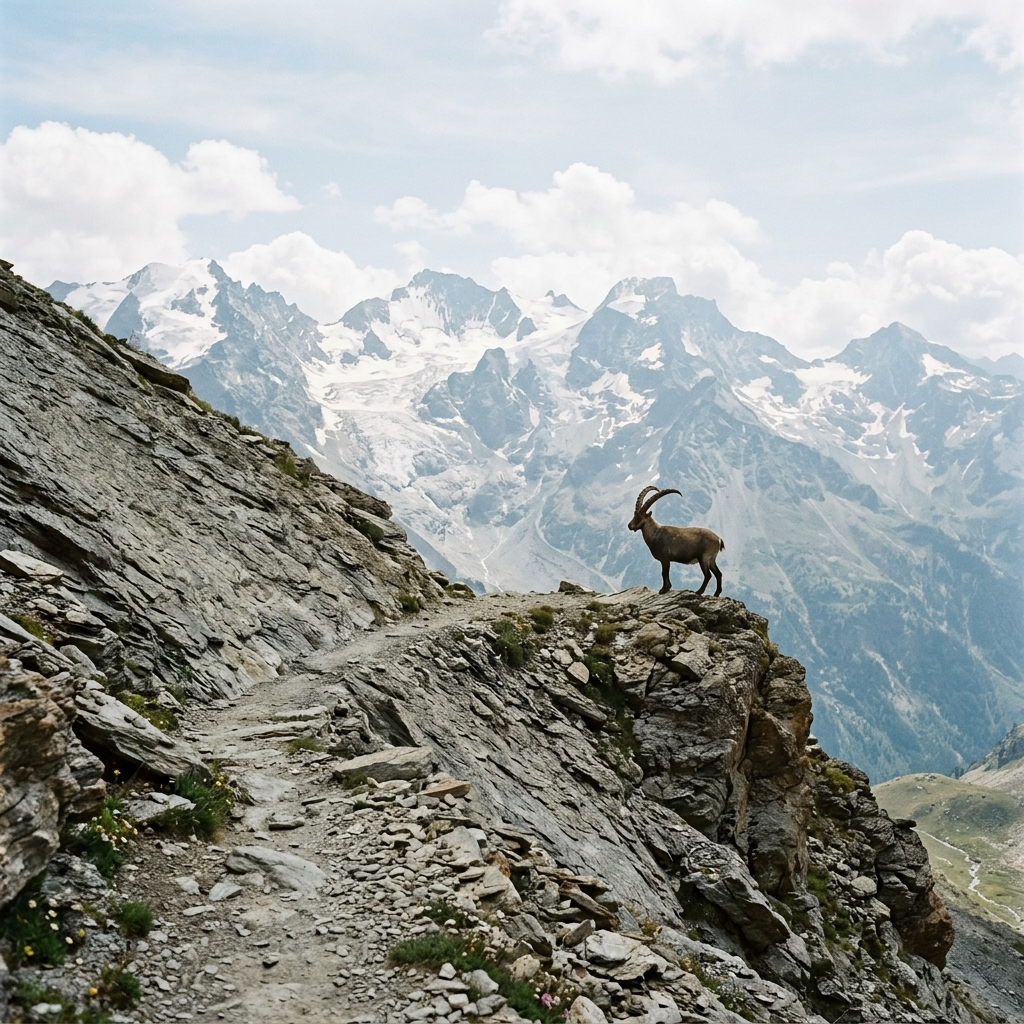
The route connects Rifugio Vittorio Sella (2,584m) with the Casolari dell'Herbetet via a sustained balcony trail. The traverse crosses steep south-facing slopes overlooking the Valnontey valley (Cogne), utilizing narrow paths through rocky karst and scree. Historically a royal hunting preserve, the area supports a high density of Alpine Ibex (Capra ibex), which are frequently observed at elevations above 2,200m.
The circuit involves a significant 1,150m vertical gain from the Valnontey valley floor.
A classic high-altitude loop in Gran Paradiso, traversing narrow balcony ledges under glacier views with frequent Alpine Ibex sightings.
Mission Snapshot
Intensity Breakdown
Understanding what drives the overall route demand
Physical
48
Technical
45
Commitment
52
Primary driver: Commitment
- Standard Recreational Effort
Serious physical effort or sustained terrain friction. Demanding but not expedition-scale.
Full Route Breakdown
Complete stage overview with transparent route metrics. Values are shown as recorded in the route dataset and source links.
Distance
22.0 km
Ascent
1,150 m
Highest point
2,584 m
Start
Valnontey to Rifugio Sella
Finish
Descent via the Valley
Use the KM / MI toggle in the main menu to switch units.
Route Profile
Single-day loop structure
Operational Reality
Itinerary details the standard 22 km loop via Rifugio Sella and Herbetet; timing may vary based on weather and route exposure. Not survey-grade GPS.
Route Considerations
Exposure to high cliff falls on narrow balcony ledges, rapid mountain weather changes (lightning), and loose scree.
Exposed balcony trail
The traverse between Rifugio Sella and Herbetet features sections of narrow trail traversing steep scree slopes, with significant drops. Some sections are equipped with fixed steel cables and artificial steps.
Impact
Route-specific
Likelihood
Context-dependent
Tip
Requires a very strong head for heights and surefootedness. Do not attempt if there is lingering snow or ice on the trail.
Rapid weather changes
The hike takes place at high altitude (above 2,500m) for many hours. Afternoon thunderstorms can roll in quickly over the glaciers.
Impact
Route-specific
Likelihood
Context-dependent
Tip
Start at dawn. Ensure you have crossed the most exposed sections of the traverse well before the early afternoon cloud build-up.
Terrain & conditions
Conditions change quickly on the ground. Slow down on wet rock and pay more attention where paths narrow or exposure increases.
Impact
Moderate
Likelihood
Variable
Tip
Refer to stage notes and expert briefings; maintain focus on slick or exposed sections.
Why hike this route?
LANDSCAPE
The uninterrupted, beautiful view of the Tribolazione Glacier from the Herbetet chalets.
VARIETY
The transition from fragrant larch forests to barren, rocky high-alpine tundra.
CULTURE & PLACE
Eating hearty Aostan polenta stew at the Rifugio Sella, surrounded by alpinists tackling the Gran Paradiso summit.
WHY GO
A classic high-altitude loop in Gran Paradiso, traversing narrow balcony ledges under glacier views with frequent Alpine Ibex sightings.
Expert Verdict
“The Sella–Herbetet Traverse (Traversata Sella–Herbetet) is a sustained alpine objective within the Parco Nazionale del Gran Paradiso. The physical load is concentrated in the steep 1,150m ascent from Valnontey and the subsequent technical descent. The route is non-climbing (Class 2) but requires specific psychological comfort on narrow, exposed ledges. Success depends on stable meteorological windows, as the traverse is highly exposed to wind and lightning. Wildlife sightings, particularly Alpine Ibex, are statistically probable in this protected sector, and the circular route rewards a dawn start with a manageable refuge stop before the exposed traverse.”
Who This Is For
- INTERMEDIATE / ADVANCED — You should have a head for heights and be comfortable scrambling over short sections of rocky, cabled path with a steep drop below.
- PHYSICAL — High. The 22km distance combined with nearly 1,200m of elevation gain makes for a very long, tiring day in thin air.
- WATCH FOR — Attempting it too early in the season. A simple snow patch on the steep traverse turns the hike into a technical mountaineering route requiring an ice axe.
- WATCH FOR — Trying to bring a dog. Park rangers will actively fine you and turn you around.
Plan This Hike
Key things to arrange before starting this route—practical tips first, then buttons that open curated picks (gear, maps, stays) where we list them.
Essential Gear
Recommended preparation for this route:
High-traction footwear, trekking poles, and warm layers.
- Sturdy mountain boots with Vibram soles for scree
- Trekking poles to protect knees on the steep descent
- Warm layers and wind/rain shell for glacier weather
Stay Connected
Explore accommodation options for this trail:
Patchy mobile network below the high peaks.
- Cell coverage is unreliable along the traverse balcony
- Download offline maps of Gran Paradiso National Park
- Emergency communication is available at Rifugio Vittorio Sella
Getting There
Travel and trail access for this route:
Cogne to Valnontey trailhead parking.
- Valnontey is located 3 km from Cogne in the Aosta Valley
- Ample paid parking is available at the end of the road
- Arrive early in August as parking fills up very quickly
Where to Stay
Explore accommodation options for this trail:
Rifugio Vittorio Sella or hotels in Cogne.
- Book Rifugio Sella months ahead for peak July-August stay
- Cogne offers excellent alpine hotels and guesthouses
- Camping in the national park core is strictly prohibited
Compare This Route
See how this route compares to similar hikes in overall demand and terrain profile.Compare routes by the shape of the effort, not only the headline score.
Corno Grande
Closest overall match in demand profile
Corno Grande (2,912m) is the highest peak in the Apennine Mountains, formin...
Intensity
≈ same difficultyMirador Las Torres
Lower overall intensity, similar terrain type
Located inside Torres del Paine National Park in southern Chilean Patagonia...
Intensity
Lower intensityPanorama Ridge
Higher physical or technical demand
The crown jewel of the Sea-to-Sky corridor. Panorama Ridge offers one of th...
Intensity
Higher intensityExplore Alternatives
Broaden the picture with easier, harder, and nearby options.
Looking for something easier?
Lower intensity — helpful if this route feels like a stretch right now.
Want more challenge?
Higher intensity — for when you are ready for a bigger physical or technical step.
More hikes in this region
Nearby and regionally relevant routes for the next step in your search.
Mount Etna Summit Craters
Sicily · italy
Distance
10.0 km
Ascent
500 m
Anello del Rinascimento
Tuscany (Florence) · italy
Distance
178.0 km
Ascent
4,500 m
Mount Redentore Trail
Lazio (Monti Aurunci Natural Park) · italy
Distance
9.5 km
Ascent
600 m
Alta Via 1
Dolomites / South Tyrol / Veneto · italy
Distance
120.0 km
Ascent
7,300 m
Stromboli Volcano Hike
Aeolian Islands (Sicily) · italy
Distance
8.0 km
Ascent
400 m
Adolf Munkel-pad
Dolomites (Val di Funes) · italy
Distance
9.5 km
Ascent
420 m
Compare with any route
Pick any hike worldwide and open a full side-by-side comparison.
What You Need to Know
Essential answers about the demands, risks, and logistics of this route.
Q.How hard is this hike really?
Q.Do I need technical gear?
Q.Is water available on the route?
Q.What is the main risk?
Ready to hike The Sella-Herbetet Traverse?
A final decision point after reviewing the route, risks, logistics, and alternatives.
This route is a strong match if you're comfortable with the effort level implied by an Intensity Score around 56/100 (Hard), sustained hiking where this route requires it, and the terrain and exposure described in this guide.
Build your itinerary, stages, and logistics.
Looking for something easier, more challenging, or a different terrain profile?
Compare routes by intensity, terrain, and region.
Data: official trail documentation and topographic sources · About