Torres del
Paine O-Circuit
The significant Patagonian odyssey.
Duration
10 days
Route distance
136.0km
Vertical Gain
+5,400m
Max Altitude
1,200m
Mission Brief
The significant Patagonian odyssey.
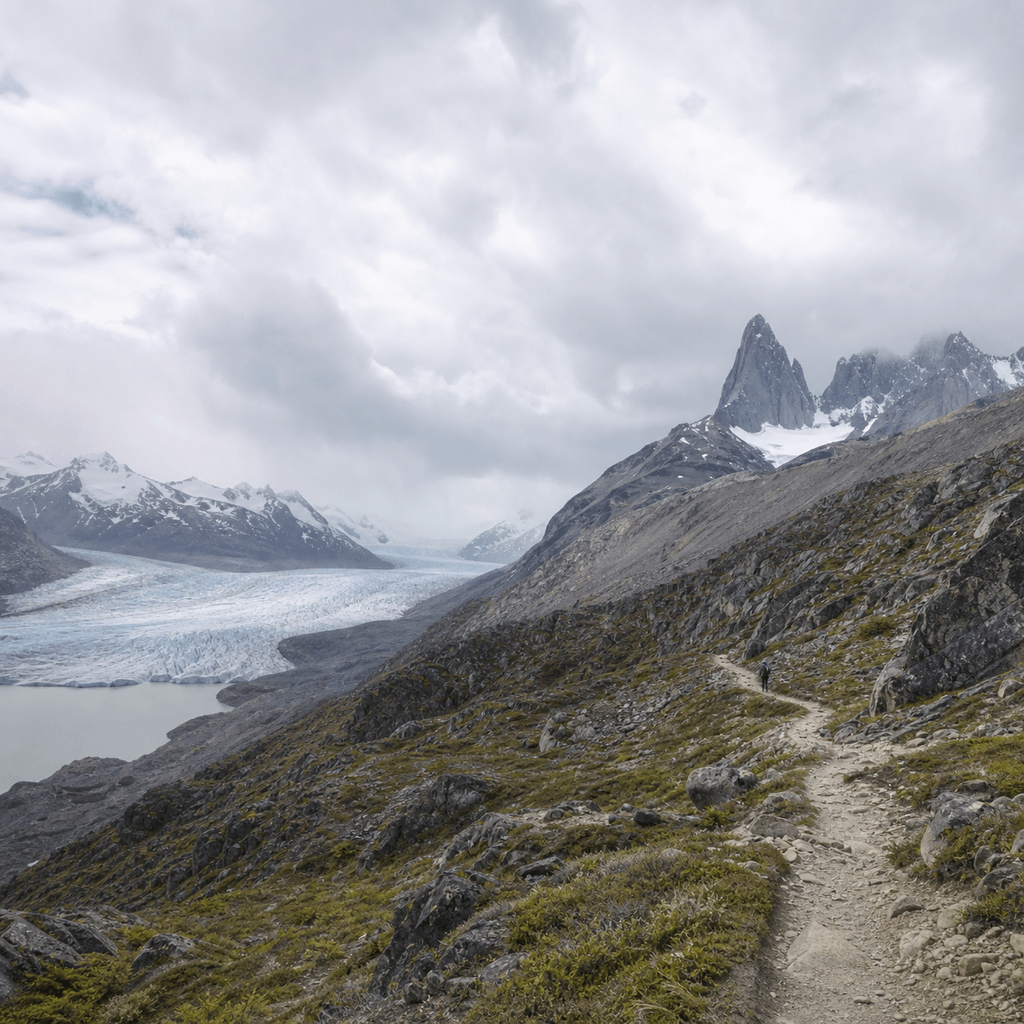
The Torres del Paine 'O' Circuit is a 136km loop that completely circumnavigates the Paine Massif. It incorporates the famous 'W' trek but adds the remote 'backside' of the park, including the John Gardner Pass (1,200m). For SEO and authority: this is the 'Expert' version of Torres del Paine.
While the 'W' is for tourists, the 'O' is for the autonomous trekker seeking the full, uncrowded silence of the Grey Glacier and Dickson valleys.
Total Isolation on the Backside. The 'X-Factor' is the transition from the busy Refugio stations of the W to the absolute wilderness of the O-backside. Seeing the Southern Patagonian Ice Field from the top of the John G…
Mission Snapshot
Intensity Breakdown
Understanding what drives the overall route demand
Physical
73
Technical
55
Commitment
100
Primary driver: Commitment
- Sustained Physical Output
- Significant Vertical Gain
- Technical Terrain Exposure
- High Remote Commitment
High commitment routes with serious consequence, remote terrain, or sustained objective hazard.
Full Route Breakdown
Complete stage overview with transparent route metrics. Values are shown as recorded in the route dataset and source links.
Distance
136.0 km
Ascent
5,400 m
Highest point
1,200 m
Start
The Backside Wilderness
Finish
The 'W' Integration
Use the KM / MI toggle in the main menu to switch units.
Route Profile
Fixed backcountry campground structure for this route
Route Considerations
This route is generally safe, but these are the main factors to be aware of.
Extreme wind exposure
Patagonian winds can reach 80-120km/h, especially on the John Gardner Pass.
Impact
Route-specific
Likelihood
Context-dependent
Tip
Unbuckle backpack waist straps when crossing exposed ridges to prevent being 'sailed' off; use low-profile trekking poles; check updated wind forecasts before ascending the pass.
Hypothermia in summer
Rapid onset of snow or freezing rain can occur even in mid-January.
Impact
Route-specific
Likelihood
Context-dependent
Tip
Carry a technical 3-layer hardshell; use synthetic or wool base layers (no cotton); maintain a high-calorie intake to fuel internal heat production.
Terrain & conditions
Conditions change quickly on the ground. Slow down on wet rock and pay more attention where paths narrow or exposure increases.
Impact
Moderate
Likelihood
Variable
Tip
Refer to stage notes and expert briefings; maintain focus on slick or exposed sections.
Why hike this route?
LANDSCAPE
The most dramatic granite towers and glacial deltas on the planet.
VARIETY
The total shift from the alpine pass view of the Ice Field to the dense Southern Beech forests.
CULTURE & PLACE
The global community of elite trekkers gathered at the end-of-day camps.
STANDOUT
Total Isolation on the Backside. The 'X-Factor' is the transition from the busy Refugio stations of the W to the absolute wilderness of the O-backside. Seeing the Southern Patagonian Ice Field from the top of the John Gardner Pass—a view only accessible on foot—is a moment of pu…
Expert Verdict
“The O-Circuit is essential for hikers wanting to experience Torres del Paine beyond the crowded W-Trek. The primary obstacle is the John Gardner Pass, but the most consistent challenge is the erratic Patagonian weather. Strong winds have been known to damage lightweight tents. Advance logistical planning is critical, as you must secure all campsites months prior to arrival. The payoff is total isolation on the northern backside and an unparalleled view over the vast expanse of the Southern Patagonian Ice Field.”
Who This Is For
- EXPERT — Significant multi-day autonomous backpacking experience. Comfort with high winds and rapidly changing alpine weather.
- PHYSICAL — Extreme. Carrying 10 days of food and gear through Patagonian terrain is a peak endurance test.
- WATCH FOR — Trying to book campsites too late (should be done 6-8 months in advance).
- WATCH FOR — Not having a wind-stable stove (MSR Reactor or similar is best).
Plan This Hike
Key things to arrange before starting this route—practical tips first, then buttons that open curated picks (gear, maps, stays) where we list them.
Essential Gear
Recommended preparation for this route:
Wind-first Patagonia kit for a loaded circuit pack.
- Stormproof shell and pack liner for fast weather swings
- Wind-stable tent if camping the backside camps
- Trekking poles and warm layers for John Gardner Pass
Stay Connected
Explore accommodation options for this trail:
Backside signal is unreliable; plan offline.
- Download offline maps before Puerto Natales
- Carry printed reservations for every camp or refugio
- Share pass-day timing with a home contact
Getting There
Travel and trail access for this route:
Puerto Natales is the practical staging town.
- Fly or bus to Puerto Natales via Punta Arenas
- Use park buses to Laguna Amarga or Central
- Check CONAF conditions before John Gardner Pass
Where to Stay
Explore accommodation options for this trail:
Backside camps and W-sector refugios must align.
- Book O-Circuit nights months ahead in peak season
- Confirm CONAF, Vertice, and Las Torres reservations
- Plan food carry before entering the backside
Compare This Route
See how this route compares to similar hikes in overall demand and terrain profile.Compare routes by the shape of the effort, not only the headline score.
Huemul Circuit
Closest overall match in demand profile
The Huemul Circuit is a ~65 km, 4–5 day self-supported trek near El Chaltén...
Intensity
Slightly lower intensityUpper Mustang
Lower overall intensity, similar terrain type
The Forbidden Kingdom. Upper Mustang is a remote, arid enclave of Nepal tha...
Intensity
Lower intensityGR10 — The Pyrenees Traverse
Higher physical or technical demand
The GR10 is a monumental, 866km trans-Pyrenean thru-hike that traverses the...
Intensity
Higher intensityExplore Alternatives
Broaden the picture with easier, harder, and nearby options.
Looking for something easier?
Lower intensity — helpful if this route feels like a stretch right now.
Want more challenge?
Higher intensity — for when you are ready for a bigger physical or technical step.
More hikes in this region
Nearby and regionally relevant routes for the next step in your search.
Torres del Paine
patagonia · chile
Distance
75.0 km
Ascent
3,000 m
Dientes de Navarino Circuit
magallanes-and-antarctica-chilena-region · chile
Distance
40.0 km
Ascent
2,100 m
Puyehue Traverse
los-lagos-region-lake-district · chile
Distance
28.0 km
Ascent
1,800 m
Mirador Las Torres
patagonia · chile
Distance
22.0 km
Ascent
1,200 m
Exploradores Glacier
aisen · chile
Distance
6.0 km
Ascent
400 m
Paso Desolación
lakes-district · chile
Distance
12.0 km
Ascent
800 m
Compare with any route
Pick any hike worldwide and open a full side-by-side comparison.
What You Need to Know
Essential answers about the demands, risks, and logistics of this route.
Q.How hard is this hike really?
Q.Do I need technical gear?
Q.Is water available on the route?
Q.What is the main risk?
Ready to hike Torres del Paine O-Circuit?
A final decision point after reviewing the route, risks, logistics, and alternatives.
This route is a strong match if you're comfortable with the effort level implied by an Intensity Score around 80/100 (Severe), sustained hiking where this route requires it, and the terrain and exposure described in this guide.
Build your itinerary, stages, and logistics.
Looking for something easier, more challenging, or a different terrain profile?
Compare routes by intensity, terrain, and region.
Data: official trail documentation and topographic sources · About